Since 2021
A Year of Progress and Consolidation
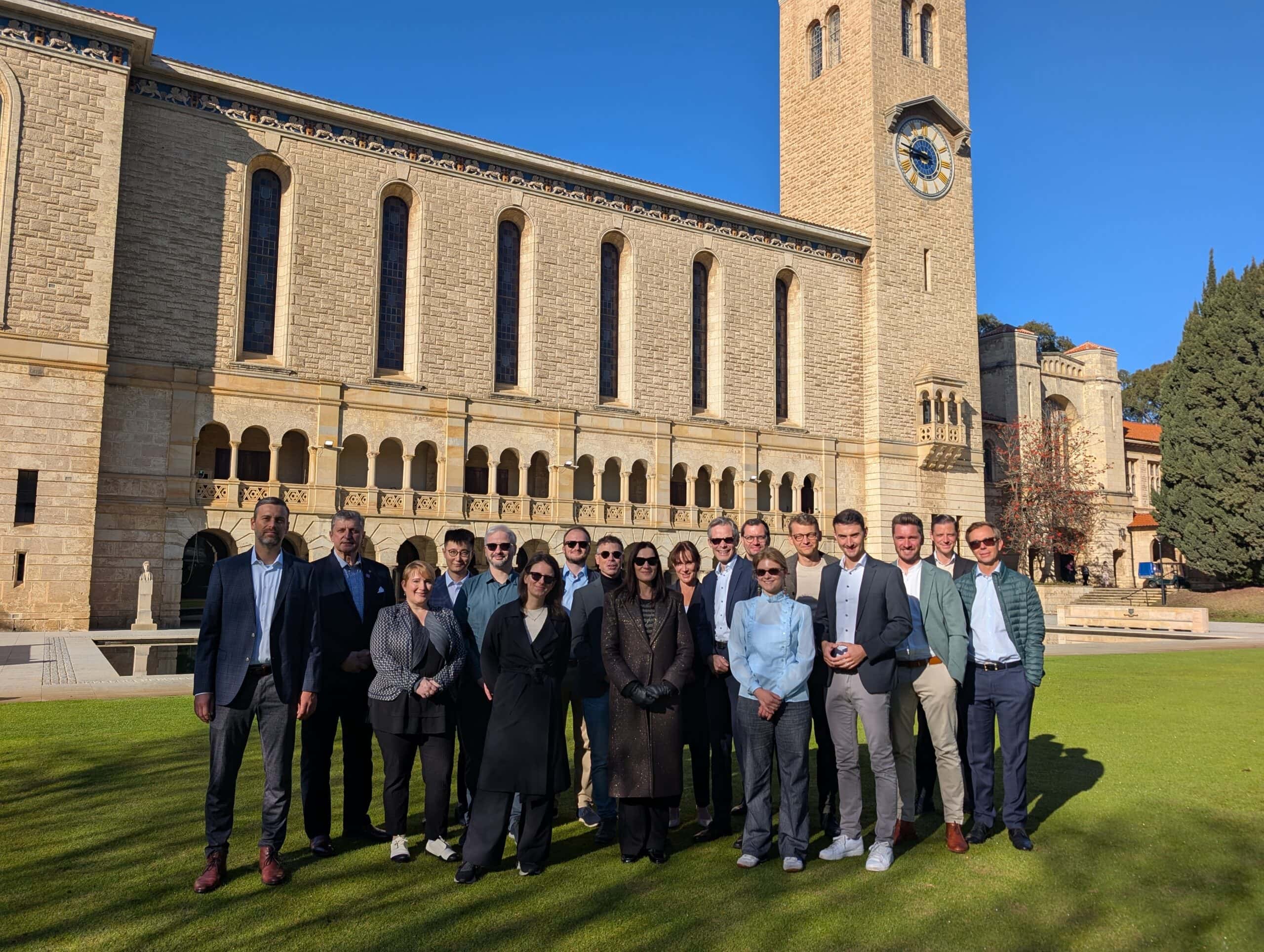
- Hydrogen cooperation reached a new level: The first Australia-EU Hydrogen Supply Chain Forum in Perth brought together over 200 participants. A German delegation led by Parliamentary State Secretary Rouenhoff also visited hydrogen and green iron projects in Western Australia.
- Electro-sustainable aviation fuel (e-SAF) trade potential explored: An in-depth study was published exploring the potential for synthetic aviation fuel trade between Australia and Europe, identifying key enablers such as regulatory certainty and financial support for project development.
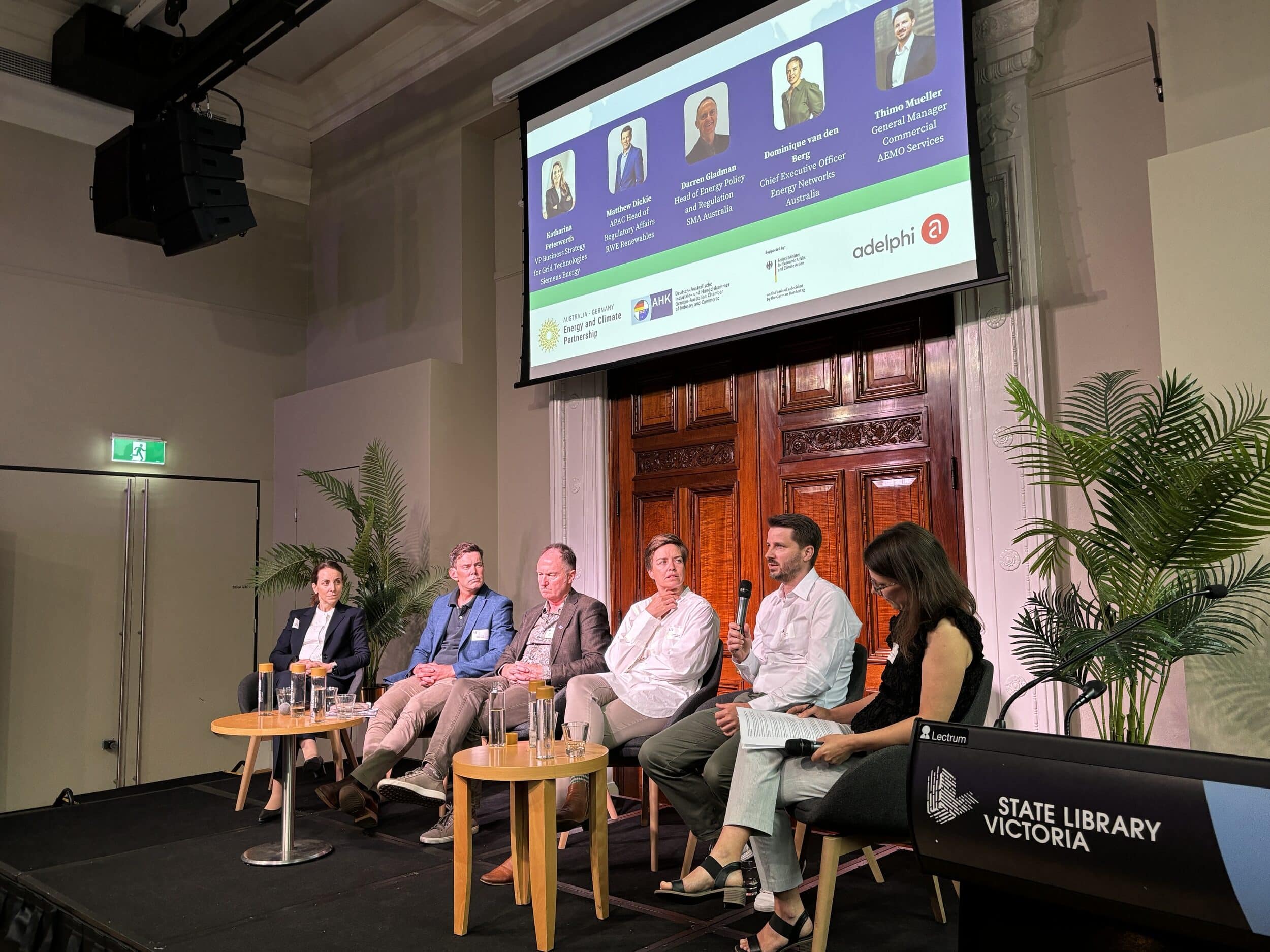
- Power system integration addressed: A workshop in Melbourne tackled the shared challenge of integrating renewables while ensuring system reliability, with contributions from German industry and Australian market stakeholders.
Energy security
Decarbonisation
Foreign Trade Promotion

In 2025, the Australian-German Energy Partnership moved from planning to concrete action. Building on the 400 million euros bilateral H2Global funding window announced in 2024, efforts concentrated on operationalising this initiative with finalising a draft auction design, starting European state aid notifications and conducting stakeholder consultations on both sides, deepening collaboration in renewable energy and grid stability, and seizing new opportunities in the field of green iron.
Hydrogen cooperation takes centre stage
The Partnership organised the Australia-EU Hydrogen Supply Chain Forum in Perth , bringing together more than 200 participants to discuss opportunities for bilateral cooperation on hydrogen, hydrogen derivatives, and green iron.
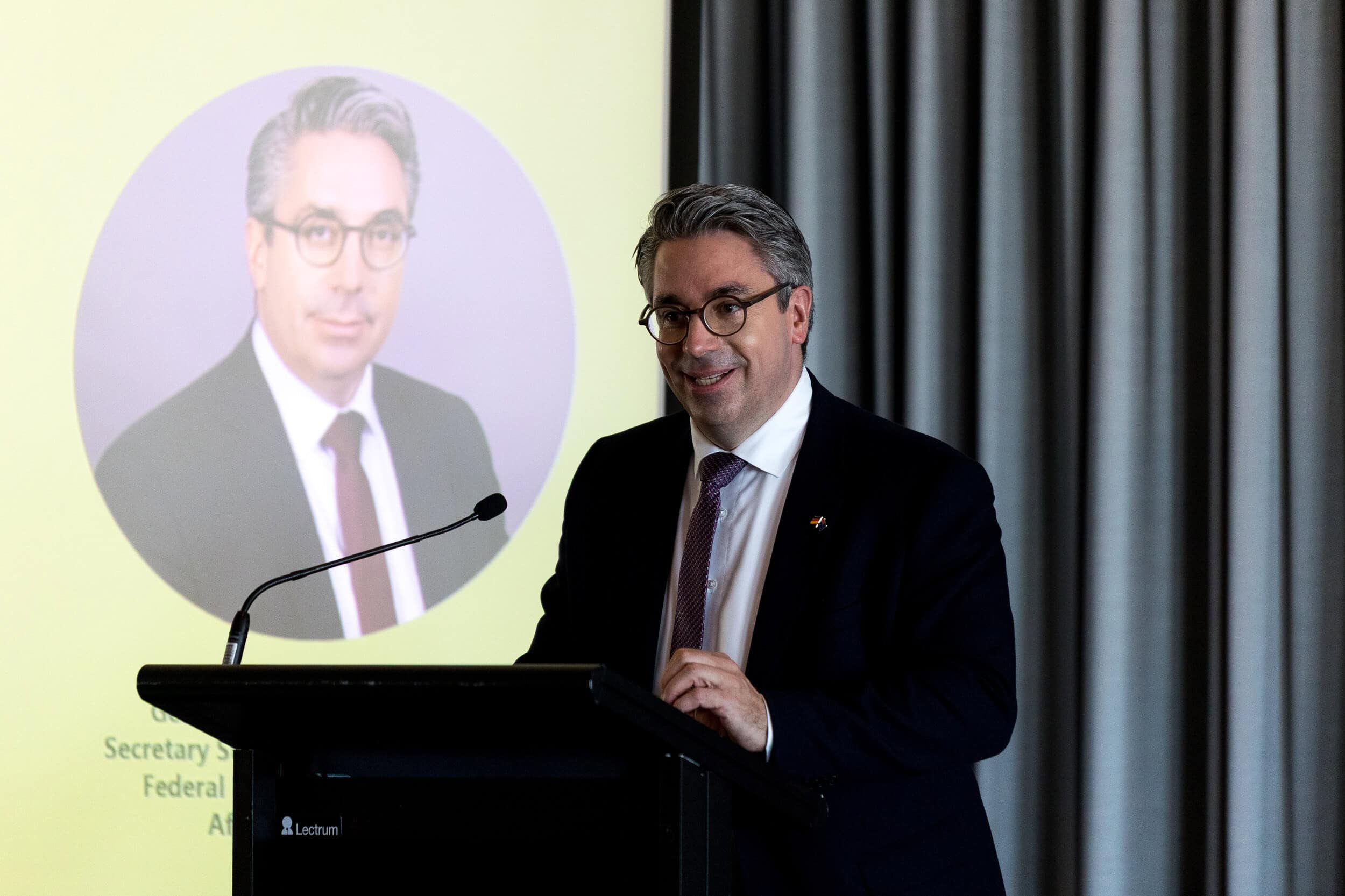
Led by Parliamentary State Secretary Stefan Rouenhoff, a German industry and research delegation visited Western Australia, including site visits to hydrogen and green iron projects in Geraldton and the Pilbara.
With new EU mandates on electro-sustainable aviation fuels (e-SAF) on the horizon, the partnership also examined the cooperation potential on synthetic aviation fuels, publishing an in-depth report identifying key enablers for bilateral trade.
Security and reliability of renewables-based power systems
A workshop in Melbourne addressed the integration of renewables into the power system, featuring insights on Australia’s ongoing market reform, perspectives from a German manufacturer, and a panel discussion on maintaining system security and reliability.
Looking ahead
2026 will be a crucial year for the bilateral H2Global auction, where an official announcement of the auction start is expected for the second half of 2026. This year, the Partnership will release briefings on key power system topics, while continuing to provide support in its core focus areas: hydrogen and energy efficiency. Organisations such as AHK Australia, Renewables Academy AG (RENAC) and The Australian Trade and Investment Commission (Austrade) remain committed to supporting partnership activities.
More information
1. What has been the most tangible outcome or impact of your partnership activities in 2025?
Australia-EU Hydrogen Supply Chain Forum in Perth: The Energy Partnership led this EU-level activity for the first time, bringing together key stakeholders. This supported several concrete industry partnerships, including a green iron production cooperation between Progressive Green Solutions, thyssenkrupp Materials Trading, thyssenkrupp nucera, SMS group, and KfW IPEX. The H2Global consultation process for the bilateral window was also supported through the forum and related activities.
2. Which focus areas were particularly relevant for your country in 2025 and why?
Hydrogen and hydrogen products remained the most relevant focus area for the Australia-German Energy Partnership, driven by several key developments:
- Implementation of the bilateral H2Global window
- Green iron as an emerging hydrogen embedded product
- e-SAF as a promising trade opportunity
- Certification and regulatory alignment
- Infrastructure development
3. What were the main challenges in implementing activities in 2025, and how were they addressed?
Hydrogen market slowdown: The global hydrogen market slowed in 2025, with the APAC H2 Summit noticeably smaller than in previous years.
The Partnership responded by shifting focus towards nearer-term opportunities with clearer business cases, such as green iron and e-SAF.
Policy uncertainty: Queensland’s change of government led to a rollback of renewable energy targets, while Australia’s withdrawal from hosting COP31 created additional uncertainty.
The Partnership maintained engagement and focused on commercially driven opportunities.
Regulatory alignment: Ensuring compatibility between Australia’s Guarantee of Origin scheme and EU certification requirements remained a challenge, addressed through targeted dialogue at the World Hydrogen Summit and trilateral studies with Germany, the Netherlands and Australia.
4. How did your activities contribute to the selected overarching goals (energy security, decarbonisation, foreign trade promotion)?
Energy security: The bilateral H2Global window aims to secure imports from Australia to Europe. The cooperation between the ports of Hamburg and Newcastle supported the diversification of energy supply chains.
Decarbonisation: The green iron partnership (Progressive Green Solutions, thyssenkrupp, SMS, KfW IPEX) advanced steel sector decarbonisation. The e-SAF study identified aviation decarbonisation pathways.
Foreign trade promotion: A German industry delegation was led to Western Australia to explore business opportunities. German Original Equipment Manufacturers (OEMs) and a project developer were supported through an in-person workshop on power system security.
Contact
Franziska Teichmann
Senior Manager & Head of the German Secretariat for the Energy Cooperation with Australia and New Zealand