Since 2019

Energy Security, Reforms and Cooperation with the Private Sector

  • Germany and Chile worked together on more (climate-)resilient infrastructures.
  • Established Business-to-Government (B2G) formats: Technological innovation for more flexible and digital grid systems, storage solutions, decentralized generation, and integrated photovoltaics.
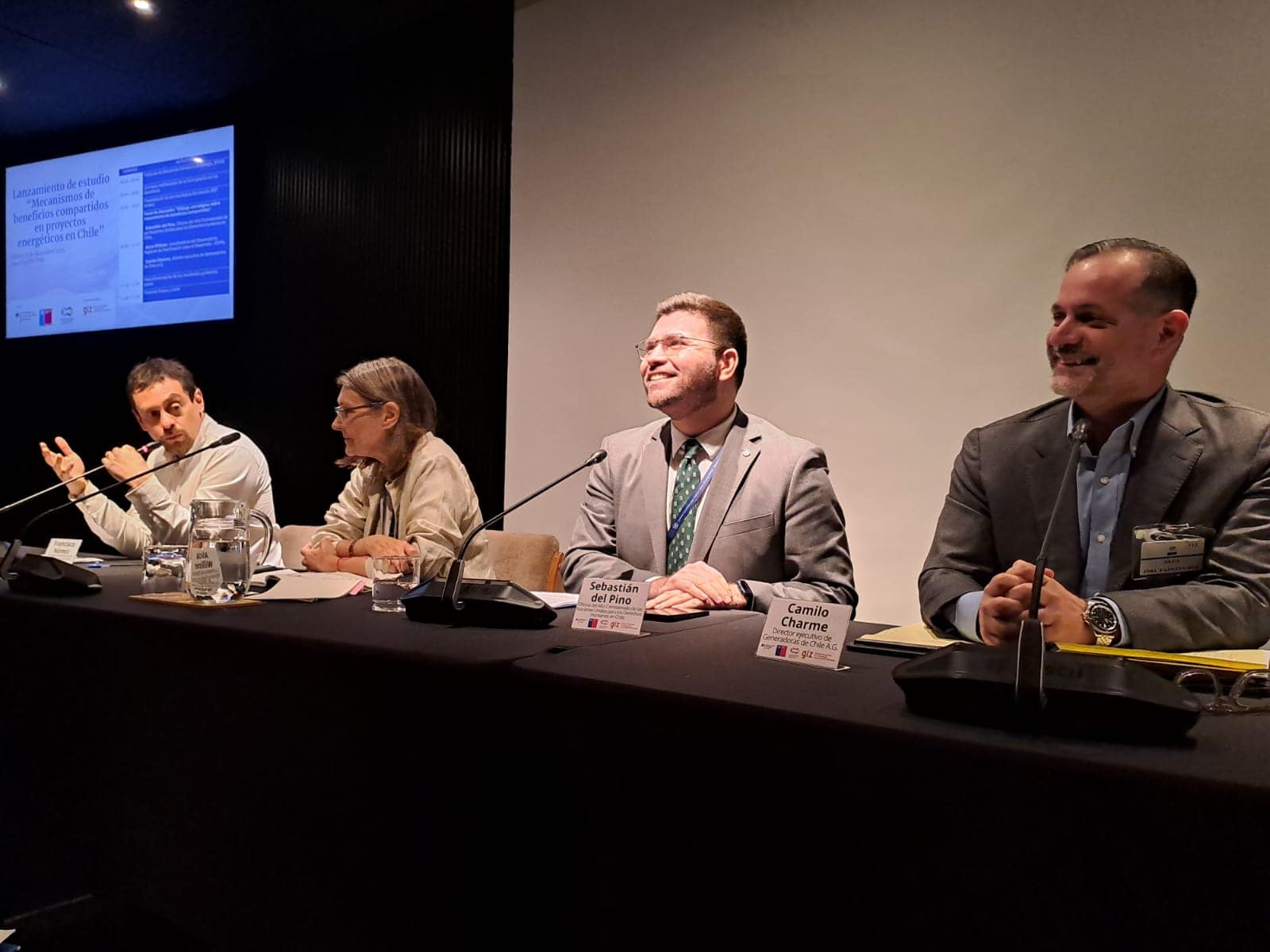
  • Input for greater social acceptance through shared benefits.
Energy security
Decarbonisation
Foreign Trade Promotion

By 2025, the Chilean-German Energy Partnership had made a significant contribution to Chile’s energy policy objectives through innovative solutions in the areas of energy security, long-term energy planning, climate action and economic development.

Chile’s farmers are struggling with the effects of climate change

Agri-photovoltaics (AgriPV) combines agriculture with energy generation. It offers solutions to two key challenges: it strengthens food security and helps to counter rural exodus. To accelerate the scale-up of this innovative technology, the Energy Partnership developed a policy brief and a handbook. These provide clarity on the regulatory, technical and social conditions, thereby supporting practical implementation.

The first successful project applications to the Irrigation Commission underscored the growing interest in AgriPV. Furthermore, local stakeholders benefited from international exchange. At events such as the Latin American and Caribbean Energy Organization (OLACDE) Energy Week, they were able to learn from European experience.

Governance, regulatory and market mechanisms

Another focus was on the socially sustainable and investment-friendly implementation of the energy transition. Three studies and analyses provided a sound basis for decision-making. They examined governance models for the financial participation of local authorities, flexible electricity tariffs through the smart meter roll-out, and indicators of climate resilience.

Strengthening political dialogue

To strengthen political dialogue, business-to-government (B2G) specialist events were held on key topics such as the recycling of energy plants, the use of biomass, and energy efficiency in industry. At the Carbon Border Adjustment Mechanism (CBAM) workshop, Chilean institutions were able to prepare for international regulations, drawing on European expertise.

Another highlight was the “Third International Seminar on Cybersecurity of Critical Electrical Infrastructure” featuring experts from the Federal Network Agency and 50Hertz. Discussions on Information Technology (IT) and Operational Technology (OT) security in crisis situations, grid resilience and regulatory frameworks strengthened security of supply and created concrete opportunities for cooperation.

More information

1. What has been the most tangible outcome or impact of your partnership activities in 2025?

For the first time, AgriPV and floating PV technologies were included in the call for proposals for the National Irrigation Commission’s Innovation Fund. This was based on the handbook and a policy brief developed by the Energy Partnership. Four projects with a total capacity of 500 kW were selected. An expansion was announced for 2026.

The implementation of energy projects aimed at ensuring the country’s energy security requires the support of the local communities concerned, resilient infrastructure, and a clear regulatory framework. The Energy Partnership provided support through specialist studies.

Accompanying communication, project management and innovation measures, including the Energy Challenge for start-ups, increased visibility, networking, and market access, and contributed to an internationally connected energy transition in Chile.

One challenge was to raise awareness among German companies of the positive developments in the Chilean energy market, partly due to complex technical and regulatory challenges. Social media campaigns were designed to facilitate access to specialist information, whilst B2G roundtables aimed to open up topic-specific business opportunities.

  • These activities contributed to energy security by strengthening climate resilience and cybersecurity.

  • They contributed to decarbonisation through technology and knowledge transfer, as well as through policy advice.

  • In addition, support for foreign trade was strengthened by involving German companies in dialogue and cooperation initiatives and by providing targeted support for start-ups.

  • Plans are in place to expand business-to-government (B2G), government-to-government (G2G) and industry-focused dialogue formats in 2026.

  • In addition, technical advice is to be provided to the Department for Energy, including on tendering mechanisms and Agri-photovoltaics.

  • Another priority is supporting start-ups, for example through the Energy Challenge 2026.

  • Communication and international visibility will also be strengthened.

Our year in pictures

Contact

Daina Neddemeyer
Head of Secretariat of the Chilean-German
Energy Partnership
In close collaboration with the
Ministry of Energy of Chile

Further partnerships in Latin America