Since 2019

Strengthening Energy Cooperation in Times of Political Transition

  • Despite political transitions in both countries, the 3rd Steering Committee Meeting in Seoul has sent a clear signal: both governments remain committed to the Energy Partnership.
  • Years of sustained policy dialogue through the Partnership fed into Korea’s landmark ‘Special Act on Offshore Wind’, which introduces a centralised permitting system inspired by the German and Danish models.
  • The Partnership continues to facilitate German companies’ entry into Korea’s offshore wind market.”
Decarbonisation
Foreign Trade Promotion
Korean-German cooperation stays the course through a year of political change

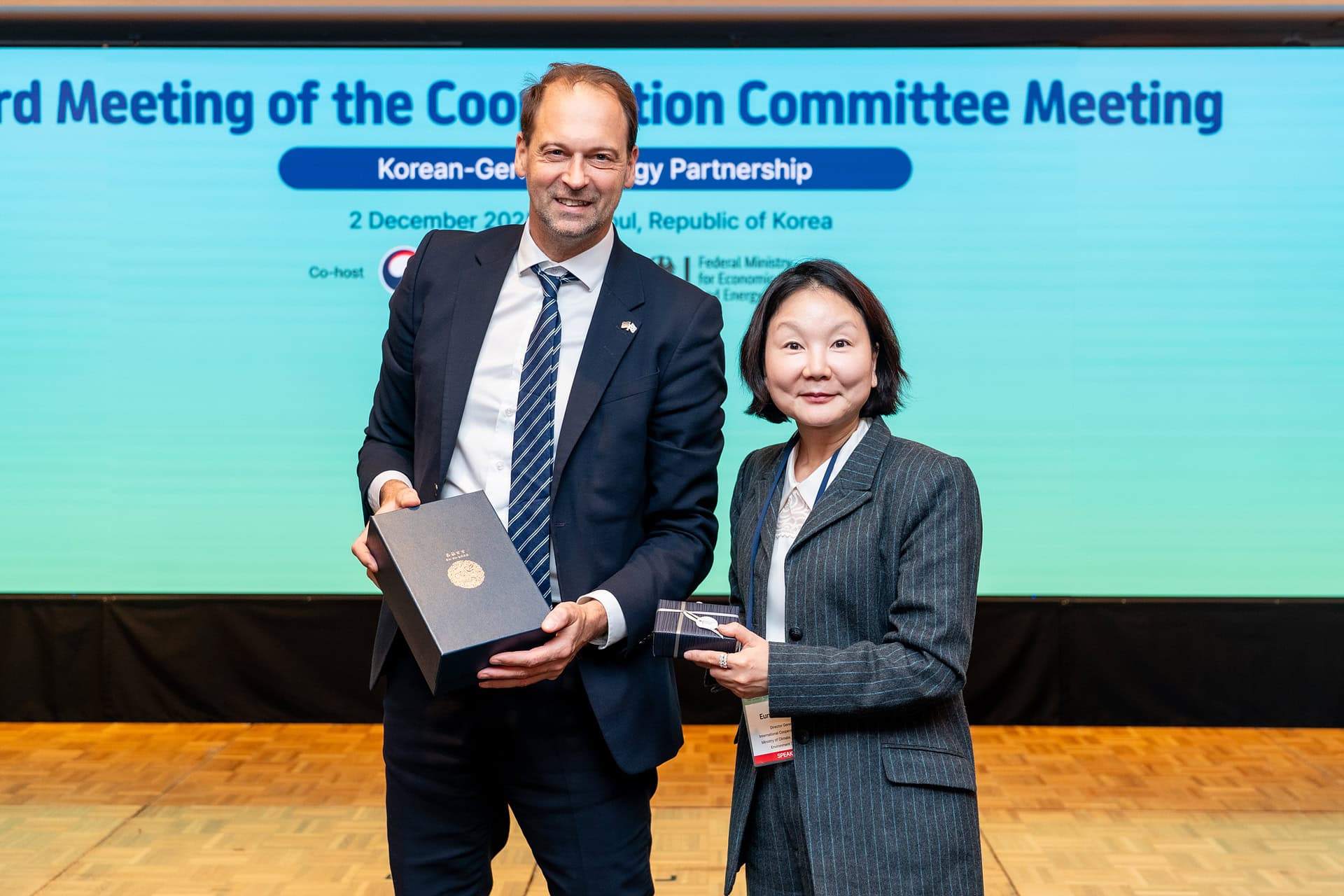
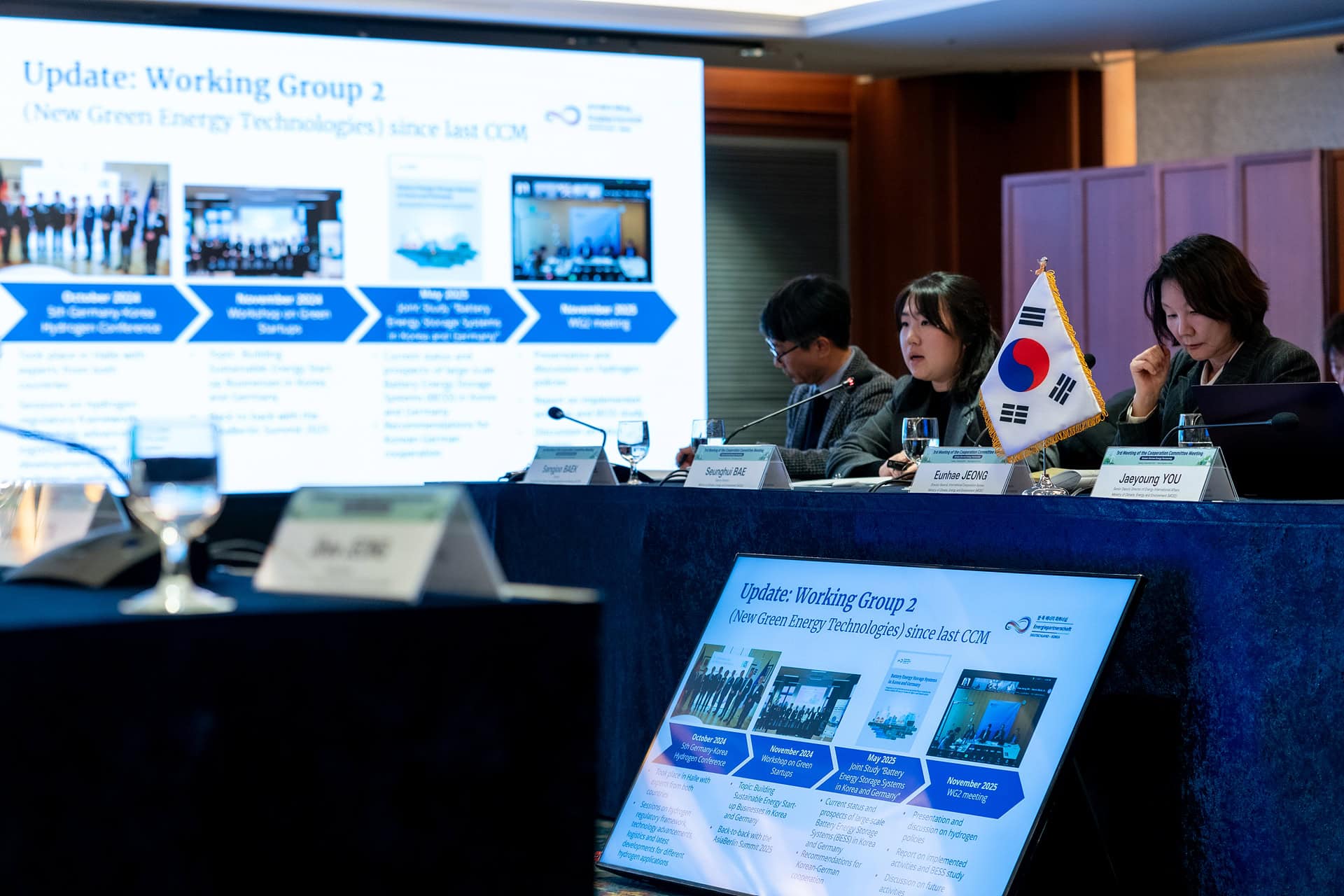
Extraordinary elections in Korea and Germany made 2025 a year of political transition in both countries, with new political priorities being defined. Still, cooperation within the Energy Partnership remained strong.  Demonstrating their ongoing commitment, senior officials from both countries met for the 3rd Cooperation Committee Meeting in December 2025 in Seoul, reaffirming their dedication to deepening collaboration on established priorities like offshore wind and hydrogen. They also agreed to expand into new areas of growing relevance for the energy transition, such as battery energy storage.

Initial steps on this topic were taken in 2025 through a study and Business-to-Business (B2B) workshop on large-scale battery energy storage systems, paving the way for further collaboration in 2026. 

Supporting offshore wind expansion through policy dialogue and industry engagement

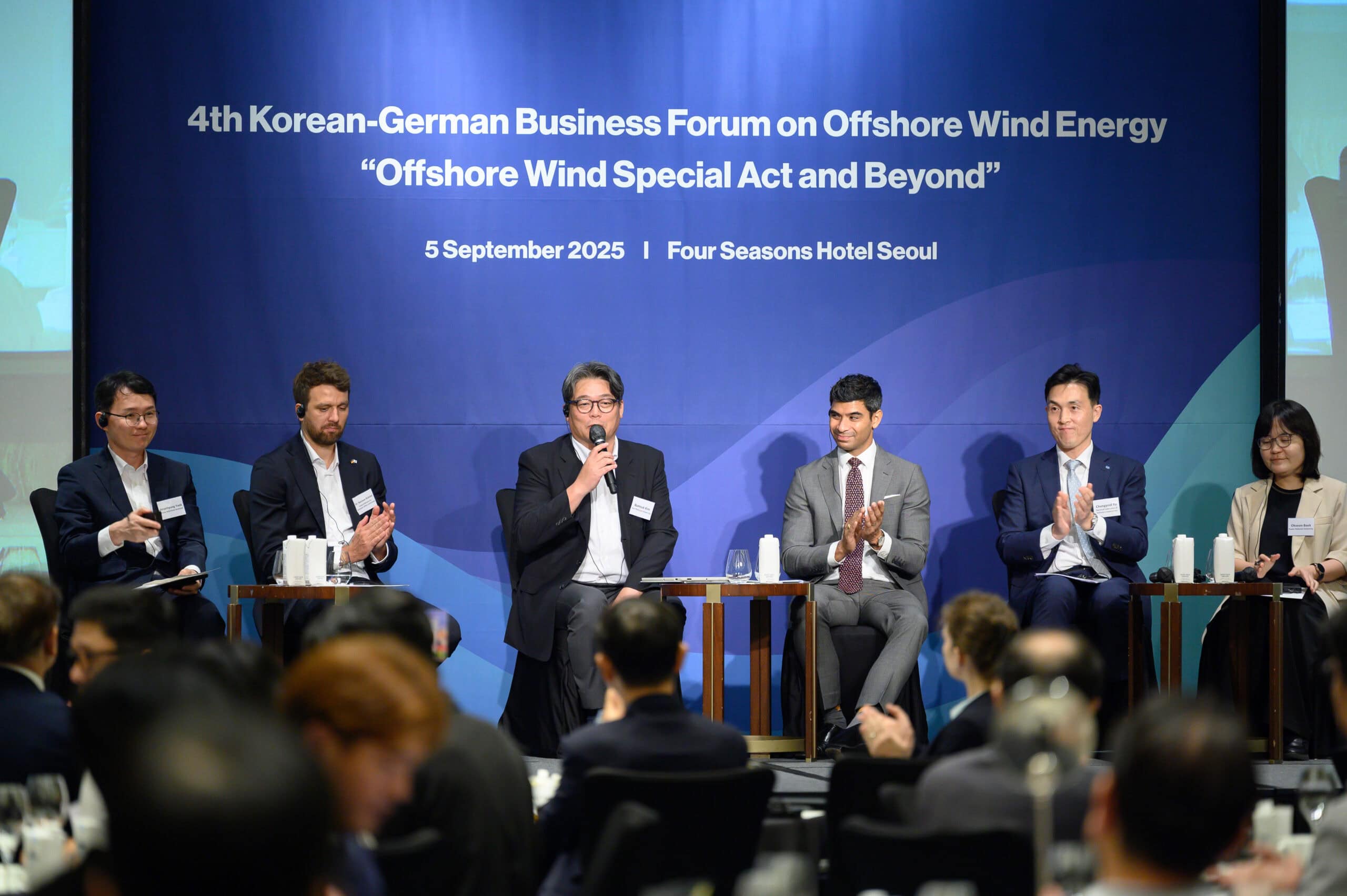
The Energy Partnership has facilitated German-Korean cooperation on offshore wind since 2019, addressing key challenges such as public acceptance, tendering, and cost efficiency through working groups, public events, and stakeholder dialogue formats. This exchange bore concrete fruit when Korea passed its ‘Special Bill on Offshore Wind’ in spring 2025, introducing a centralised permitting system informed by German and Danish models. Through the Partnership’s dialogue formats and communication channels, German companies were able to contribute to the legislative process with practical insights and recommendations. Beyond policy dialogue, the German-Korean Offshore Wind Business Forum continues to play a key role in connecting German companies with the Korean market. Since its inception in 2021, German companies have secured project licences, established themselves as turbine suppliers, and entered into joint ventures with Korean partners.

More information

1. What has been the most tangible outcome or impact of your partnership activities in 2025?

In spring 2025, the Korean National Assembly passed the ‘Special Bill on Offshore Wind’. The new Korean permitting system for offshore wind projects exhibits characteristics from the German and Danish systems. Offshore wind has been a central topic of cooperation in the Energy Partnership since its inception in 2019. The design of the new Korean system exemplifies the effects of continued exchange on policy strategies over many years, as well as the importance of providing platforms for German companies from the Korean energy sector to voice feedback. 

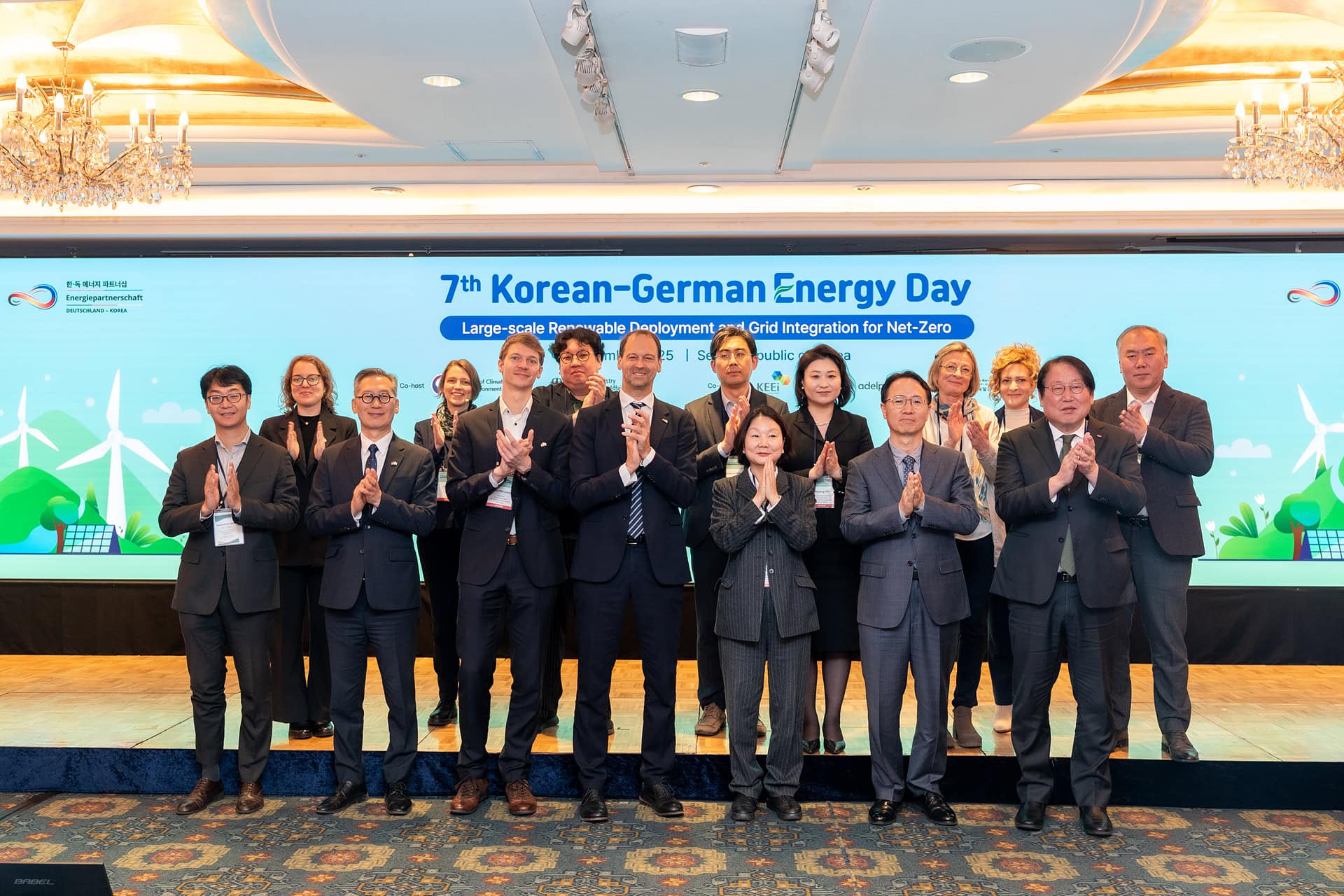
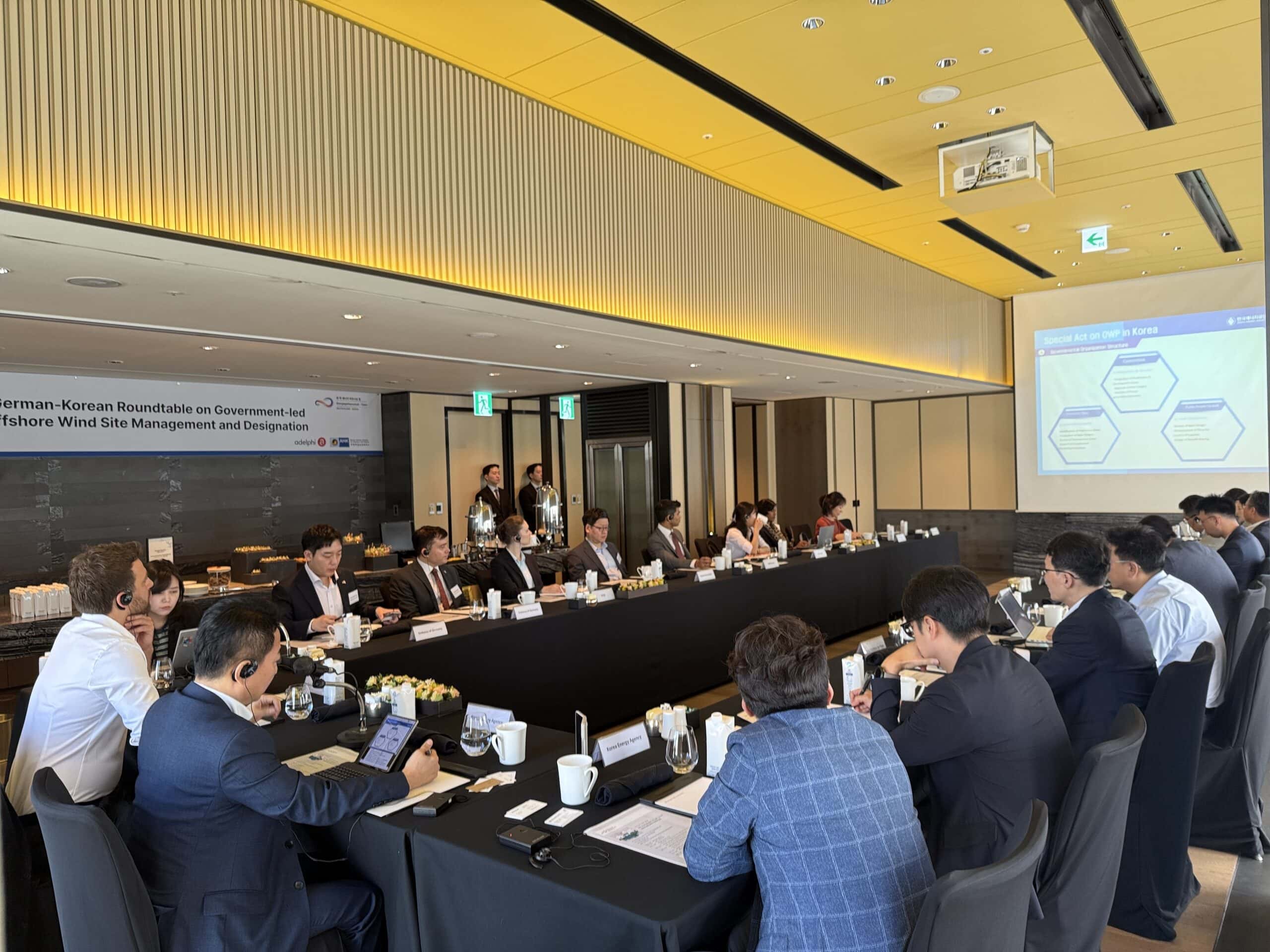
  • Large-scale renewable energy deployment: Despite shifting policy priorities, the commitment to reaching net-zero by mid-century remains strong in both countries. This year’s cooperation, therefore, focused on the large-scale deployment of renewable energies and their integration into the electricity grid. To reach individual targets, both countries intend to significantly increase their use of renewable energy and overcome the key challenges associated with integrating it into the electricity grid. These issues were discussed at the 7th Korean-German Energy Day and during the Working Group Meeting. Moreover, practical challenges regarding the deployment of offshore wind energy were addressed at the 4th Business Forum on Offshore Wind and during a roundtable on government-led offshore wind site management and designation.
 
  • Battery Energy Storage: This year, battery energy storage was identified and introduced as a new key area for cooperation. On the one hand, energy storage plays a central role in creating decarbonised electricity systems and integrating variable energy sources. On the other hand, Korea is a major global leader in battery production. Given Germany’s strong battery research sector and Korea’s aim to extend and improve its production capabilities, there are several potential areas of cooperation to be further explored in 2026.
 
  • Hydrogen: Hydrogen continues to be a highly relevant topic of cooperation within the Korean-German Energy Partnership as clean hydrogen plays a central role in both nations’ decarbonization strategies and the complementary strengths of each country create significant potential for collaboration: Korea has established itself as a leader in hydrogen refuelling infrastructure and fuel cell vehicles, while Germany brings extensive expertise in electrolyser technology and large-scale hydrogen production.

Decarbonisation

The Energy Partnership contributes to the decarbonisation efforts in both countries through the various activities within the two Working Groups on Energy Transition and New Green Energy Technologies. For instance, the 6th Korea-Germany Hydrogen Conference facilitates the exchange of hydrogen policy information between the two countries and provides insights into the current state of hydrogen technology research. Further cooperation impulses for deep decarbonisation were provided by products such as the study on ‘large-scale battery energy storage systems in Korea and Germany’.

Foreign Trade Promotion

Events such as the 4th Korean-German Business Forum, the 7th Korean-German Energy Day and dedicated workshops enable German companies to showcase their expertise, expand their networks and voice their concerns directly to the Ministries.  The Korean-German Business Forum on Offshore Wind is a particularly well-established event, allowing companies to highlight the key challenges they face in deploying offshore wind in Korea and broaden their network.

The 8th Korean-German Energy Day in Germany.

Our year in pictures

Contact

Jana Narita
Senior Manager of the Korean-German Energy Partnership
In close collaboration with the
Ministry of Climate, Energy and Environment (MCEE) of Korea

Further partnerships in Asia