Since 2012
Uniting Turkish and German Expertise for Low-Carbon Heating
- Türkiye is a global geothermal leader with 1.7 GW installed capacity and high-temperature resources that offer valuable insights for Germany’s heat transition.
- The study tour in Izmir enabled direct technical exchange among ministries, industry associations, research institutions and operators.
- Participants from Germany gained practical understanding of operations, resource management and market conditions through site visits and discussions with Turkish experts.
- The programme generated concrete outcomes, including new business contacts and ongoing advisory support for specific projects.
- Germany’s efficient district heating systems and Türkiye’s large‑scale geothermal development complement each other, creating strong potential for continued bilateral cooperation.
Energy security
Decarbonisation
Foreign Trade Promotion

Türkiye’s geothermal experience can benefit Germany
The close cooperation in the field of innovative low-carbon heating is but one success story of the Energy Partnership that benefits both countries.
Türkiye is one of the world’s leading geothermal markets, with 1.7 GW of installed capacity and decades of experience in applications ranging from electricity generation and district heating to agriculture, tourism, and industry. In the Aydın region, geothermal resources can reach temperatures of up to 300°C, enabling large-scale utilisation. This experience can prove valuable for Germany as it provides useful insights for the ongoing heat transition.
From dialogue to practice
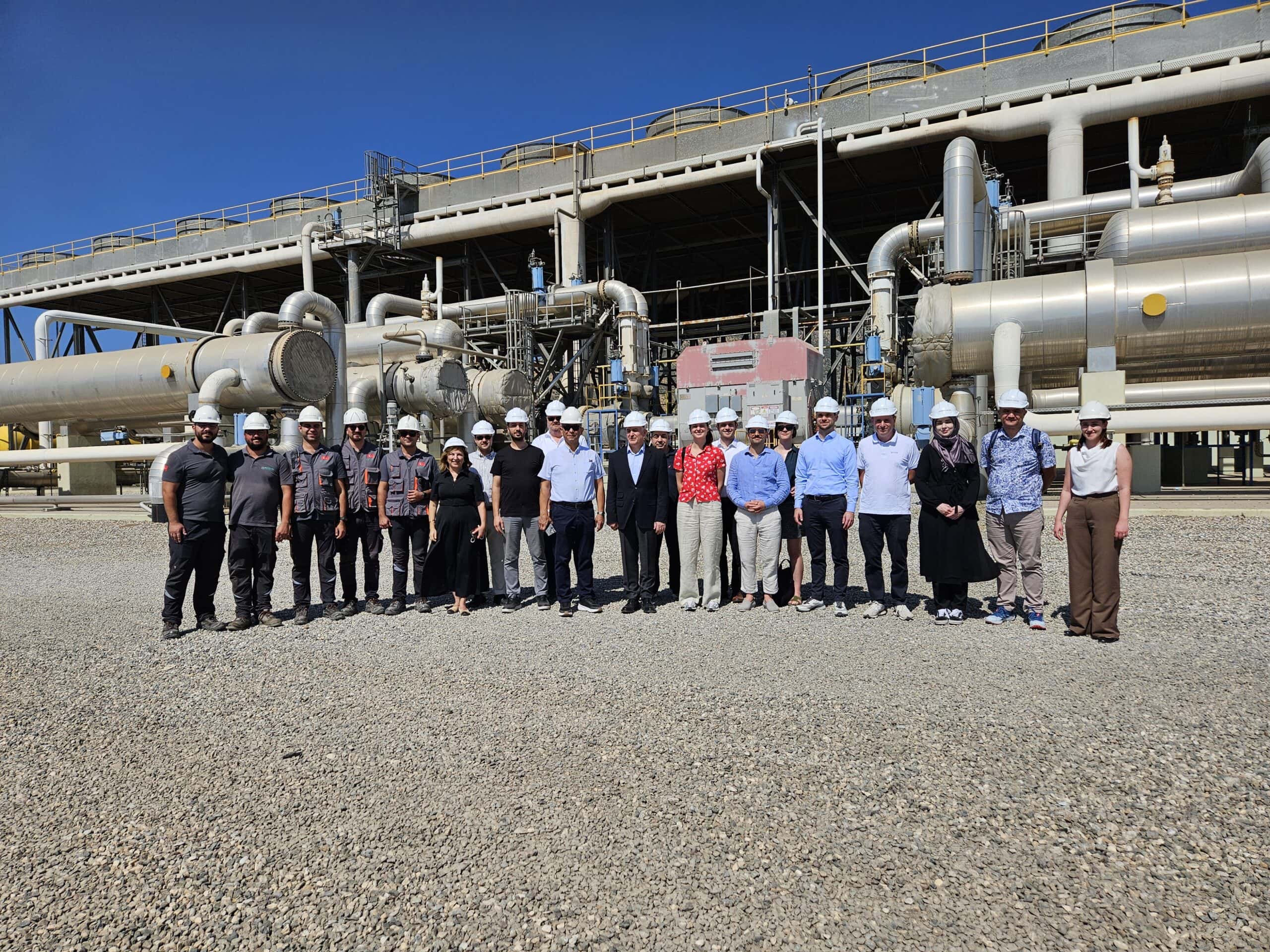
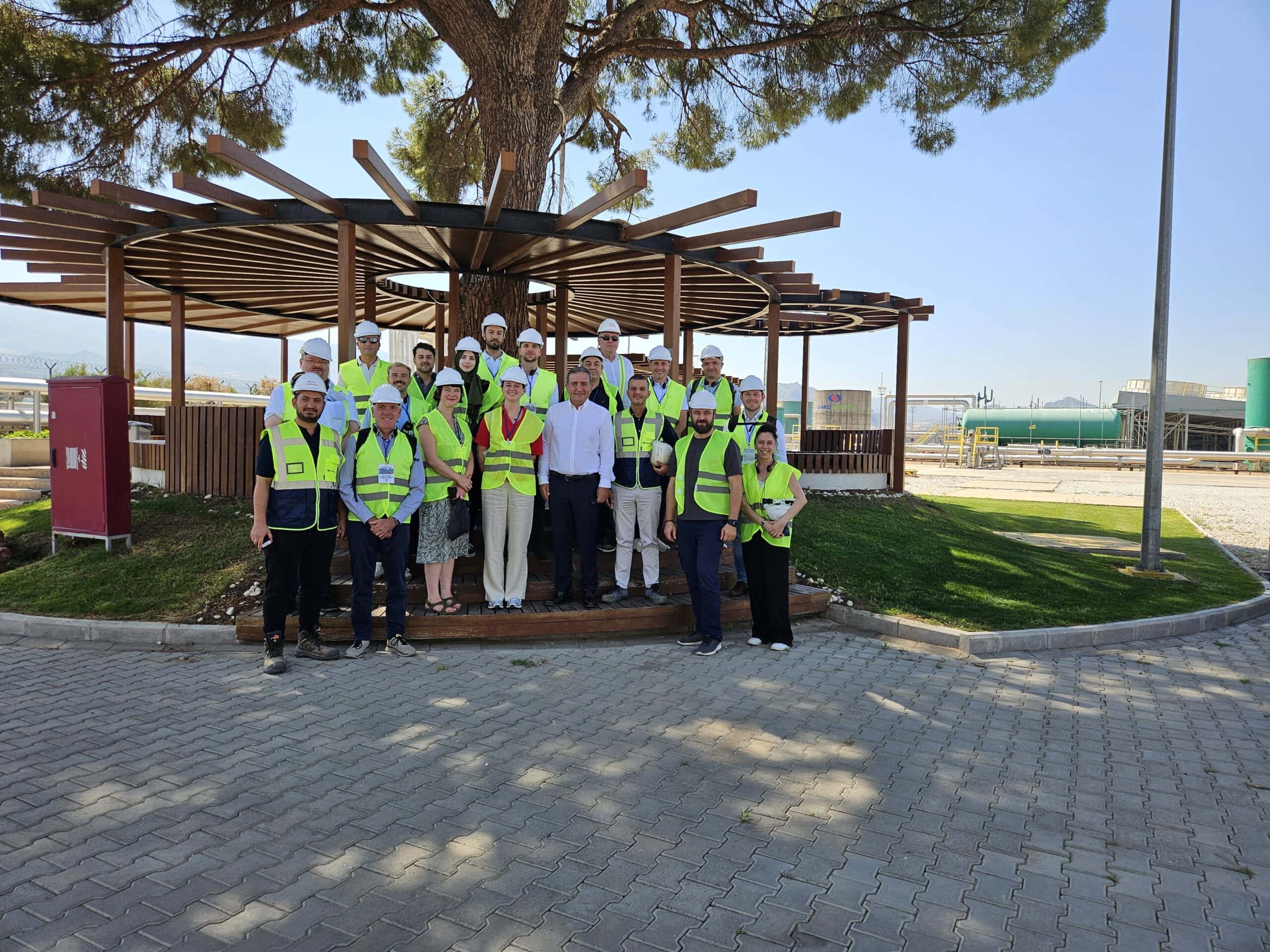
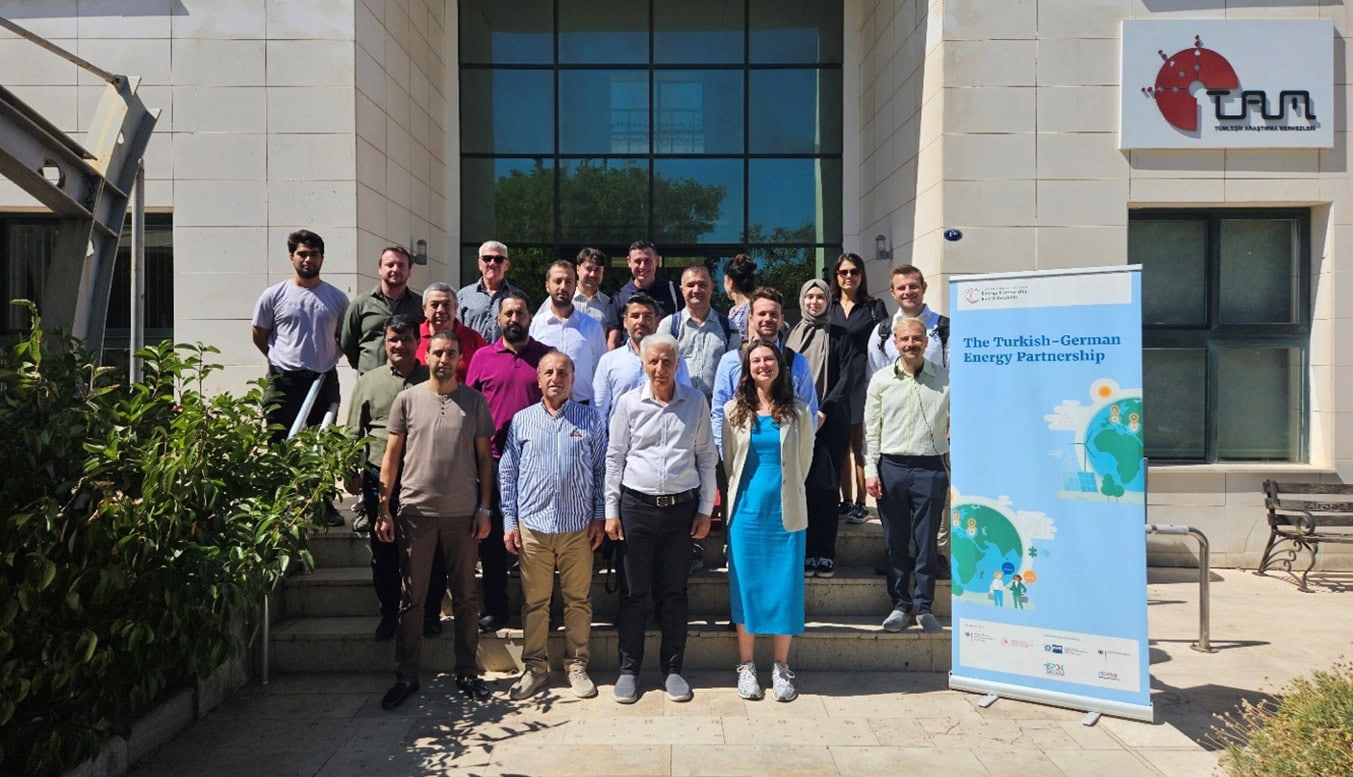
In September 2025, the Turkish-German Energy Partnership, in cooperation with the Ministry of Energy and Natural Resources of the Republic of Türkiye, organised an expert dialogue and study tour in Izmir and its surrounding regions. The programme brought together a wide industry network, including the Geothermal Power Plant Investors Association (JESDER), the Geothermal Energy Association (JED), the Izmir Institute of Technology (IYTE), and Izmir Jeotermal AŞ.
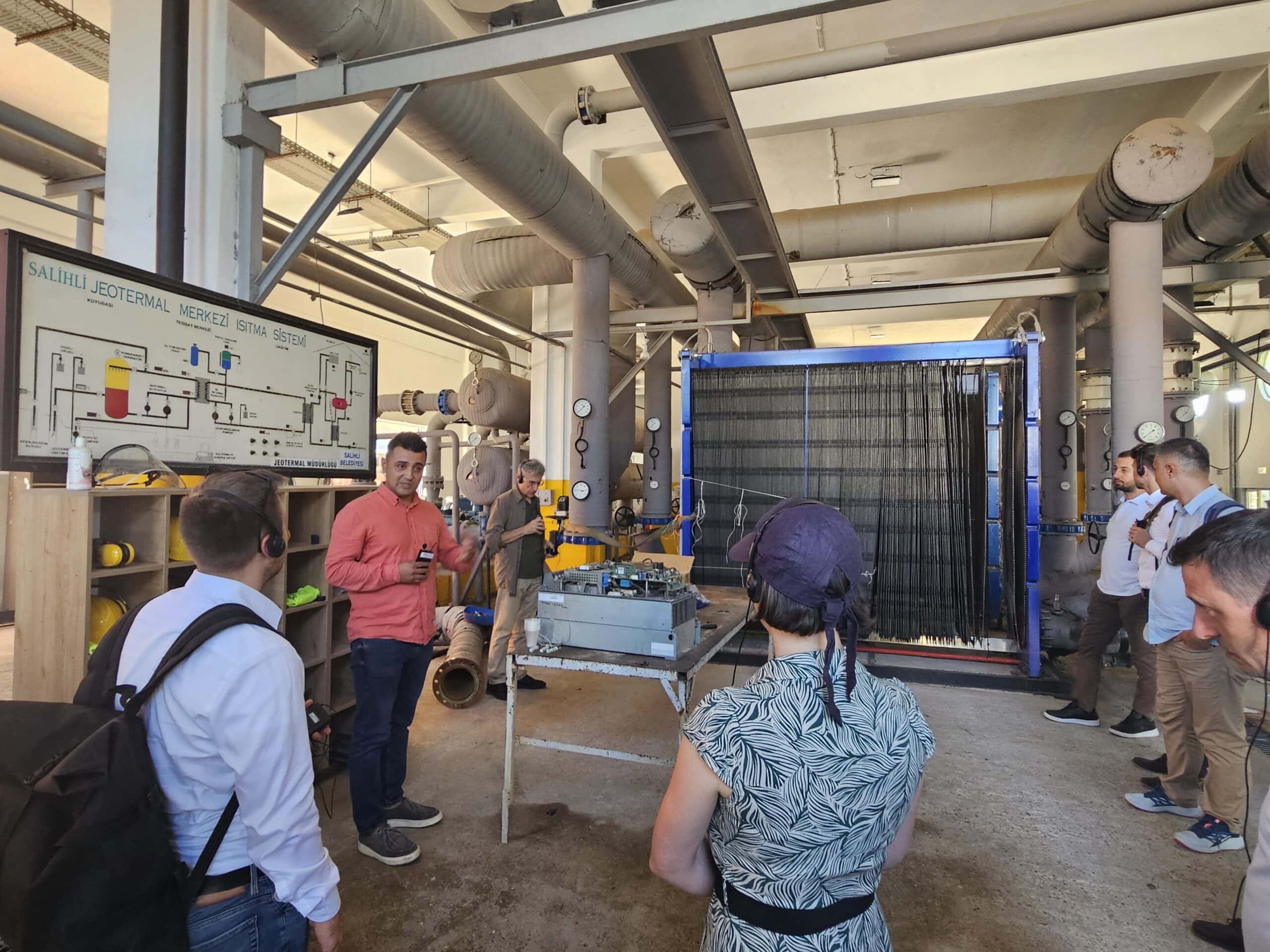
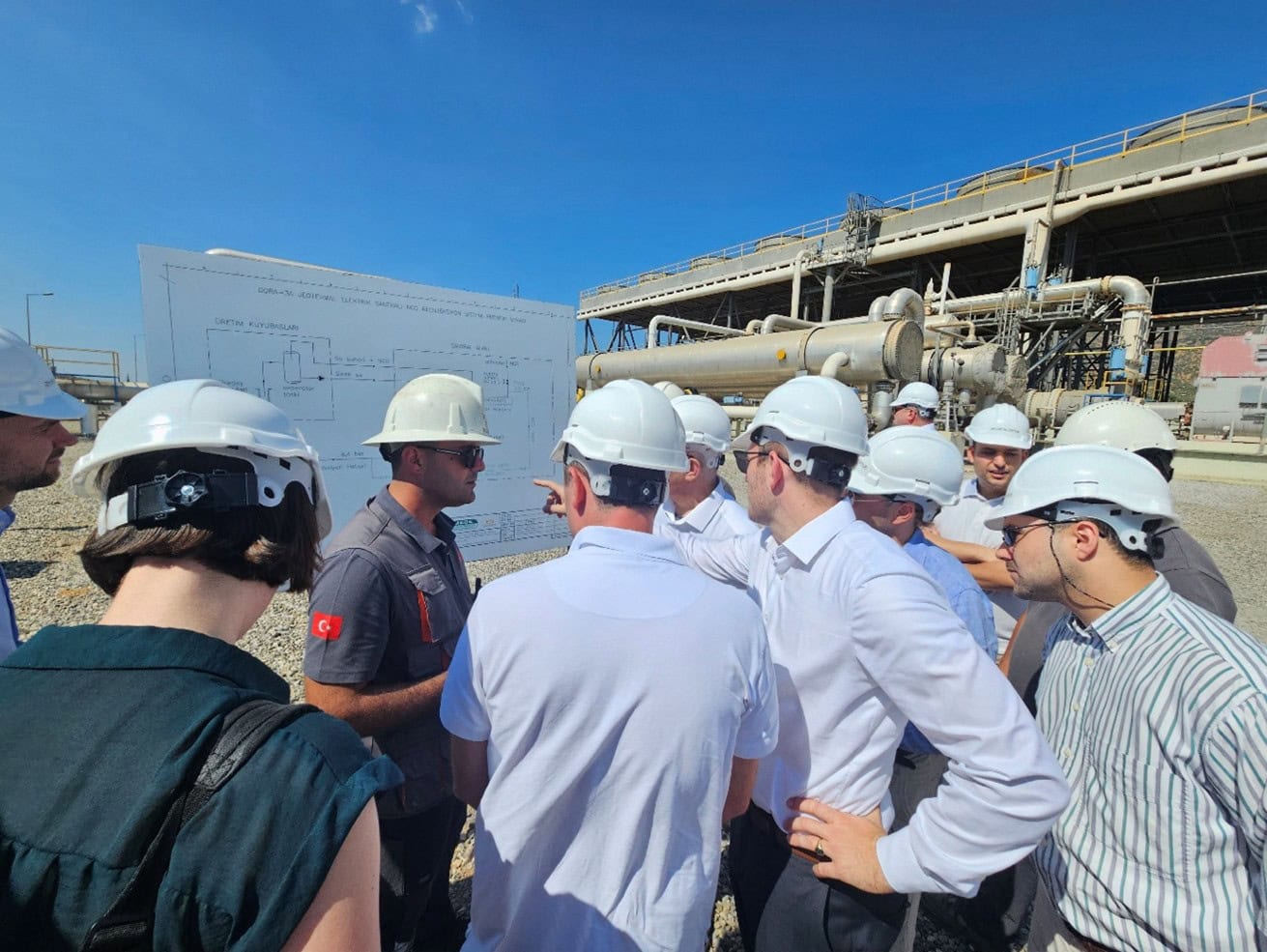
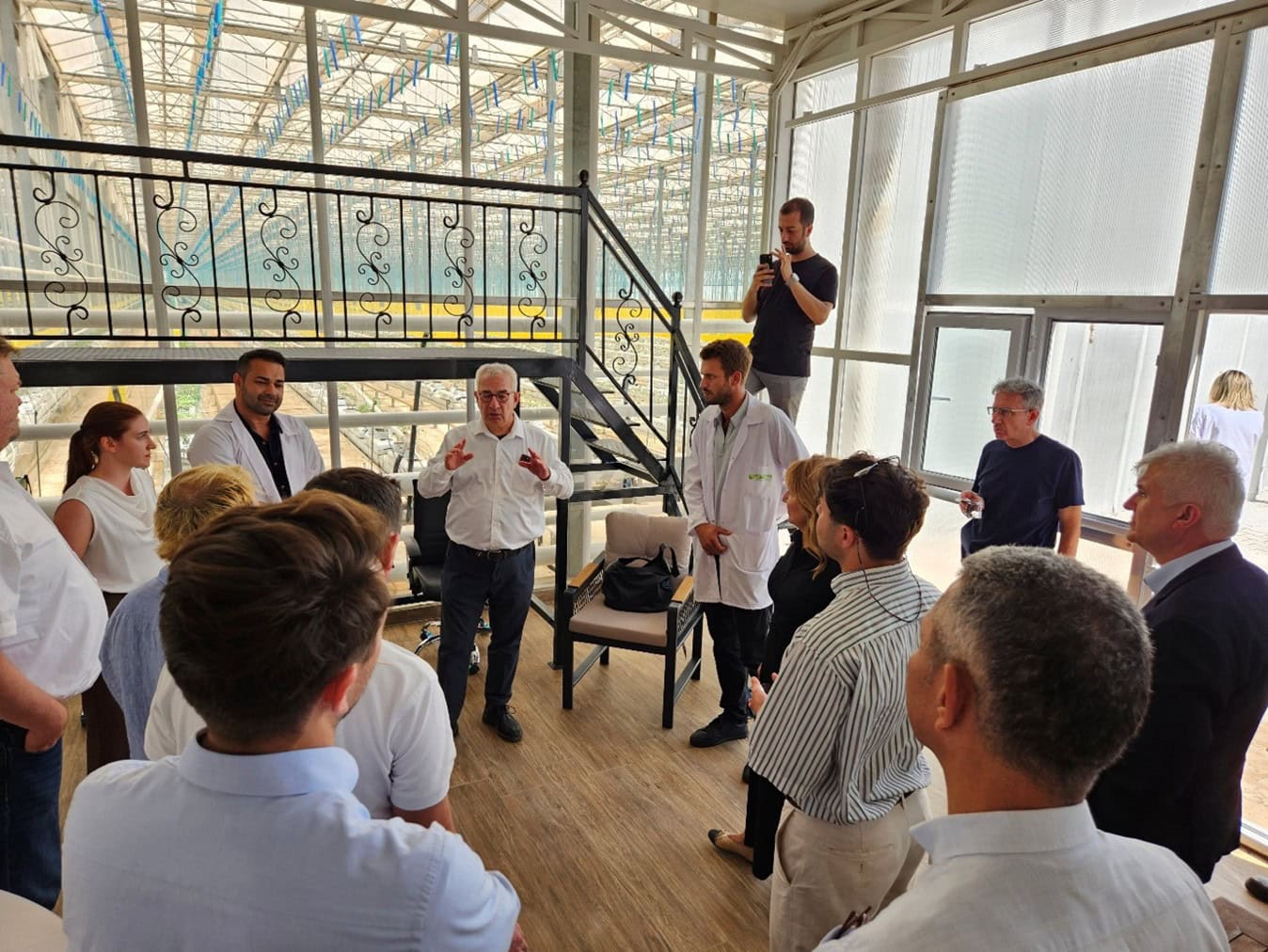
Participants visited geothermal power plants, district heating facilities, greenhouses, and research laboratories, enabling direct technical exchanges on operations, resource management, and market conditions.
Outcomes and impact
The expert dialogue and study tour enabled German participants to engage in in-depth discussions with Turkish operators, researchers, and industry leaders, addressing technical questions and building professional connections for future cooperation. These exchanges led to exploratory talks on trade and technology partnerships: a Turkish geothermal expert is now (2026) advising a German municipal utility on deep geothermal development, while a German company is in intensive talks with two Turkish firms. Several participants also initiated follow-up discussions with potential partners, with plans to continue these conversations at GeoTHERM 2026 in Offenburg.
Outlook
Germany’s expertise in efficient district heating and Türkiye’s proven experience in large-scale geothermal development provide a strong basis for future collaboration. To deepen this partnership, additional visits to Germany are planned for 2026, building directly on the Izmir study tour and a previous exchange in Landau in der Pfalz and Karlsruhe in 2024. This approach aims to ensure continuity and maximises long-term impact.
Working hand in hand with the private sector
In the video, Dr Philipp Ulbrich, CFO of Enerjisa Energy, explains how the partnership is working alongside businesses to drive the energy transition forward.
You are currently viewing a placeholder content from Vimeo. To access the actual content, click the button below. Please note that doing so will share data with third-party providers.
More InformationMore information
1. What has been the most tangible outcome or impact of your partnership activities in 2025?
Geothermal energy:
The publication of the study on geothermal cooling, shared with over 40 leading experts from policy, business and academia in Türkiye, strengthened the knowledge base in both countries and stimulated professional exchange.
Agrivoltaics:
The high number of registrations for the agrivoltaics webinar demonstrated strong stakeholder interest, while the related policy paper provided a practical reference to advance implementation in Germany and Türkiye.
Concentrated solar power (CSP):
Two CSP potential analyses for production sites in the food industry delivered concrete decarbonisation roadmaps, and the inclusion of new advisory board members expanded the international network of solar thermal experts.
E-mobility:
The workshop series, panel discussion and subsequent policy paper on charging infrastructure created a structured and widely shared analysis of barriers and solutions, contributing directly to Türkiye’s strategic approach to scaling up e-mobility infrastructure.
Grids:
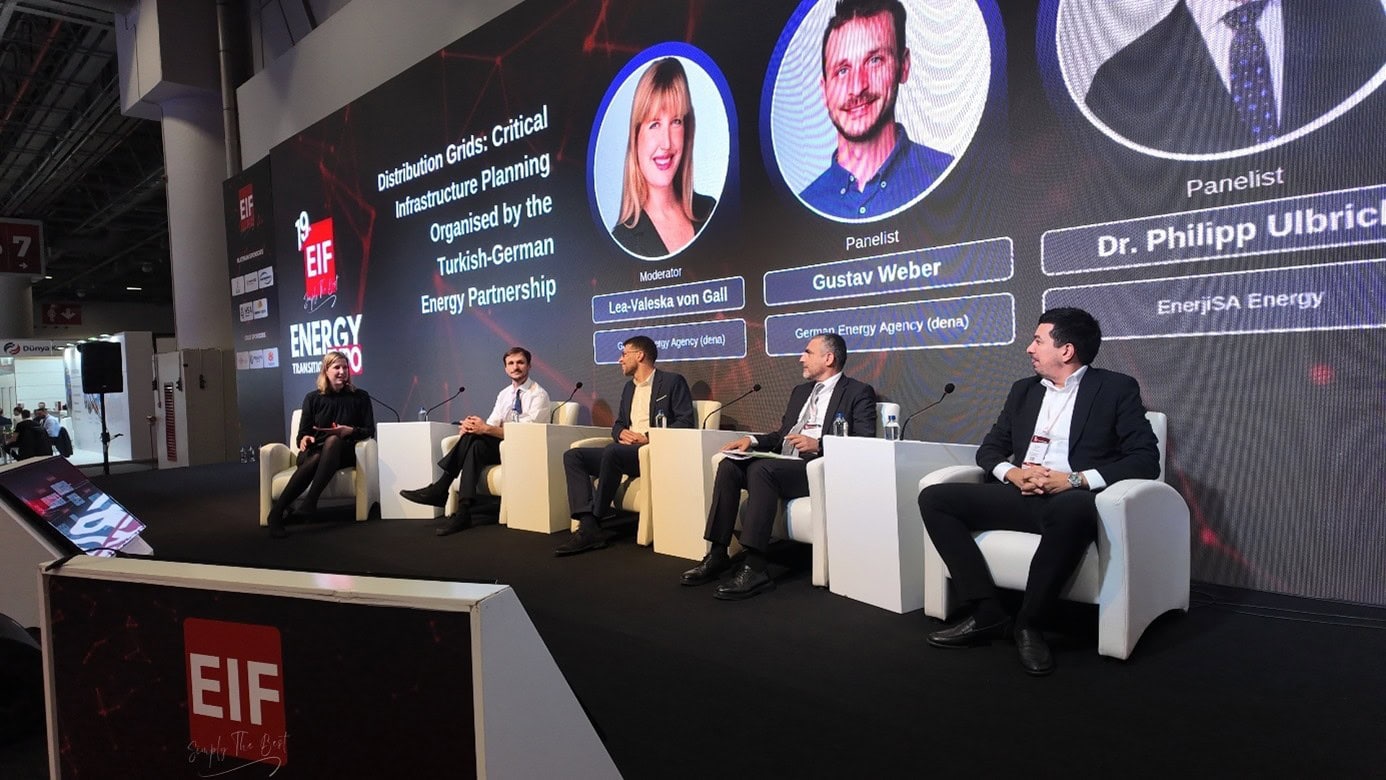
A high-level panel at the Energy is Future fair built on the 2024 grid modelling study and translated its findings into stakeholder dialogue. In addition, the conceptualisation and launch of a peer-to-peer digitalisation challenge between a Turkish DSO and a German company marked a shift towards concrete implementation, with the selection of a Turkish distribution system operator (DSO) in 2026 as a first step.
Green hydrogen:
A delegation’s visit to North Rhine-Westphalia strengthened bilateral hydrogen relations through exchange on regulatory and business best practices. The transport study provided strategic guidance for the Task Force Green Hydrogen and now informs the 2026 work plan, including plans to conduct an analysis of port infrastructure.
Energy efficiency:
The energy service company (ESCO) delegation trip to North Rhine-Westphalia enabled concrete discussions on potential joint energy performance contracting (EPC) projects between Turkish ESCOs and German industrial companies, moving beyond dialogue towards practical cooperation.
2. Which focus areas were particularly relevant for your country in 2025 and why?
In 2025, foreign trade promotion and energy security were the central focus areas, complemented by strengthening grid flexibility as a key enabler of the energy transition.
For Türkiye, foreign trade promotion was essential to attract investment, expand industrial value creation and integrate innovative technologies into its rapidly growing energy market. In sectors such as geothermal energy, green hydrogen, e-mobility, CSP and agri-PV, cooperation with German partners supported technology transfer, local capacity building and access to international markets. By conducting potential analyses and facilitating direct exchange at fairs, conferences and on delegation visits, the Turkish-German Energy Partnership brought companies together and supported the development of concrete cooperation and market opportunities.
Energy security remained a priority in light of geopolitical uncertainties and the continued need to reduce dependence on fossil fuel imports. The activities therefore focused on accelerating renewable energy deployment, strengthening energy efficiency capacities and advancing hydrogen as a future energy carrier. Closely linked to this was grid flexibility: as renewable shares increase, modernised distribution networks, digitalisation and appropriate tariff structures were critical to maintaining system stability, affordability and long-term resilience.
3. How did your activities contribute to the selected overarching goals (energy security, decarbonisation, foreign trade promotion)?
Geothermal energy:
The study tour to Izmir strengthened foreign trade promotion by enabling business-to-business (B2B) contacts and exploratory partnership talks. At the same time, the ongoing advisory role of a Turkish expert supporting a German municipal utility contributed directly to energy security through the expansion of domestic renewable heat.
CSP:
The presentation of CSP potential analyses increased awareness of technological options for industrial decarbonisation and supported informed investment decisions in low-carbon heat solutions.
Grids:
The DSO Digitalisation Challenge advanced all three overarching goals: digital grids improved security of supply by reducing outages, enabled higher renewable integration through flexibility, and promoted German grid technologies through a peer-to-peer implementation format.
Agrivoltaics:
By facilitating expert exchange on agrivoltaics, the Turkish-German Energy Partnership supported the expansion of decentralised PV generation, contributing to decarbonisation and more resilient local energy systems, while also creating opportunities for cross-border project development.
E-mobility:
A stakeholder survey, technical workshops and a policy paper delivered concrete recommendations on flexible charging and load management to support renewable integration, grid stability and transport decarbonisation. The intensive exchange on standards, business models and supply chains also strengthened bilateral economic cooperation in the e-mobility sector.
Energy efficiency:
The ESCO delegation enabled concrete cooperation between Turkish and German companies, stimulating potential EPC projects that reduce energy consumption and emissions while strengthening bilateral trade relations.
Green hydrogen:
The transport study and delegation activities supported the diversification of future hydrogen imports and strengthened bilateral cooperation, contributing to long-term energy security and the development of a sustainable hydrogen market.
4. What concrete activities are planned for 2026?
-
In January 2026, the German Federal Ministry for Economic Affais and Energy (BMWE) and the German Federal Foreign Office (AA) undertook a delegation visit to Ankara to meet with key stakeholders from politics, business, and finance.
-
On 17 March 2026, a delegation of eight start-ups from Türkiye pitched at the SET Tech festival in Berlin.
-
On 26 February 2026, the results of the study on geothermal cooling is presented at the GeoTHERM expo and congress in Offenburg.
-
The Energy Partnership will attend the Intersolar Europe from 23-25 June and will organise a workshop on CSP with the Ministry of Energy and Natural Resources.
-
Dr Alparslan Bayraktar, Minister of Energy and Natural Resources of the Republic of Türkiye, and Katherina Reiche, Federal Minister for Economic Affairs and Energy of the Federal Republic of Germany, as well as other high-level representatives will participate in the 7th Turkish-German Energy Forum on 19th June 2026.