Since 2019
Advancing Clean Hydrogen Cooperation with Saudi Arabia
- The Yanbu Green Hydrogen Hub and NEOM projects have emerged as global frontrunners for green hydrogen export to Europe.
- The Saudi Vision 2030 and the ambitious targets for renewable expansion and clean hydrogen offer significant potential for German companies to engage in the Saudi market as technology providers, including for hydrogen, renewable energies and batteries.
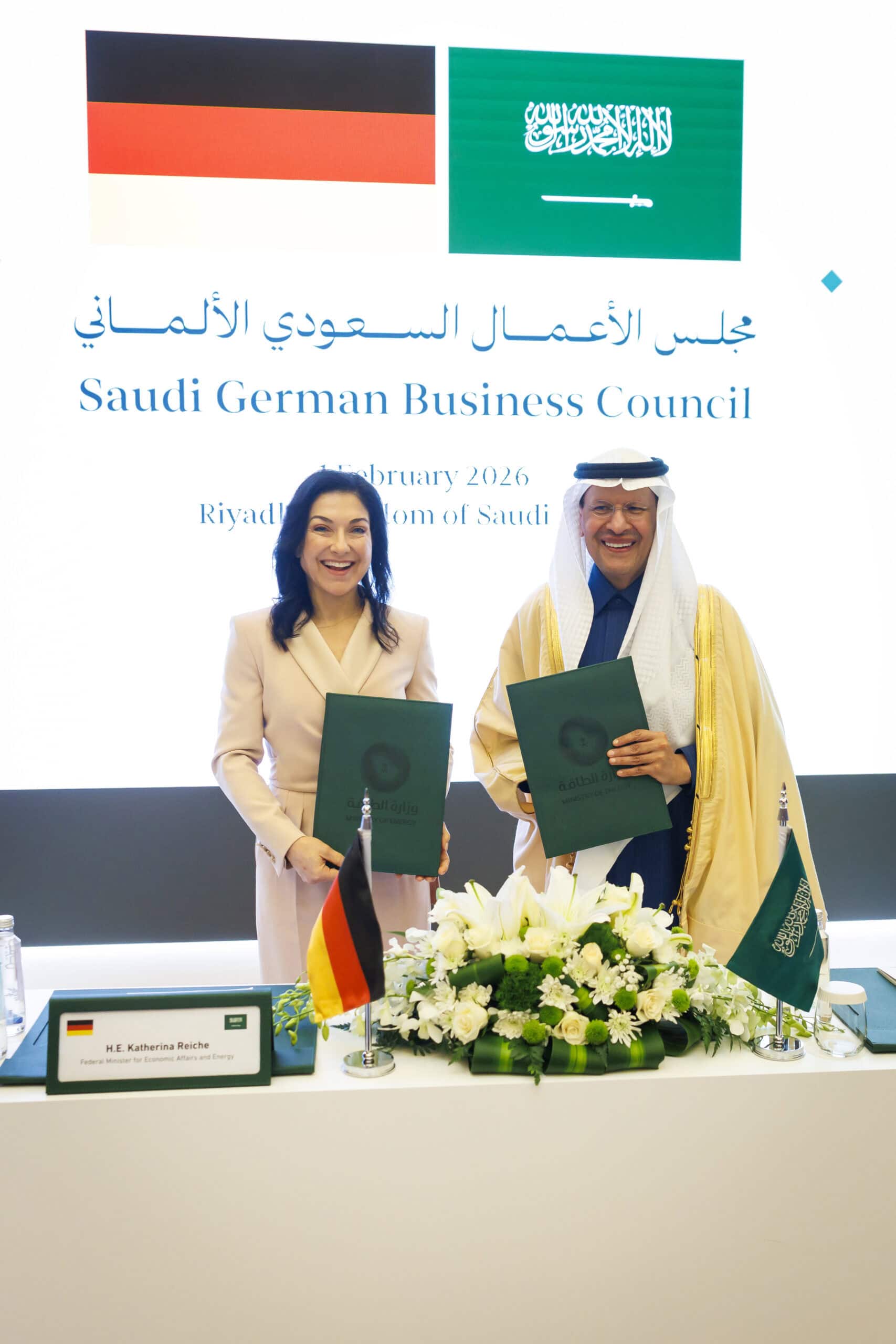
- H.E. Minister Katherina Reiche’s visits to Riyadh and Jeddah as well as the signing of a Memorandum of Understanding on deeper energy cooperation strengthened bilateral relations and the Energy Dialogue.
Energy security
Decarbonisation
Foreign Trade Promotion
Hydrogen as a central priority
In 2025, hydrogen remained central to bilateral energy cooperation and the Energy Dialogue’s activities.
Beyond the NEOM project, Yanbu Green Hydrogen Hub emerged as one of the leading green hydrogen projects in Saudi Arabia, aiming to produce 400,000 tonnes of clean hydrogen annually by 2030.
In 2025, major German companies such as EnBW, SEFE, Linde, and Siemens Energy signed Memoranda of Understanding (MoU) and Joint Development Agreements (JDAs) with ACWA Power for the Yanbu Green Hydrogen Hub.
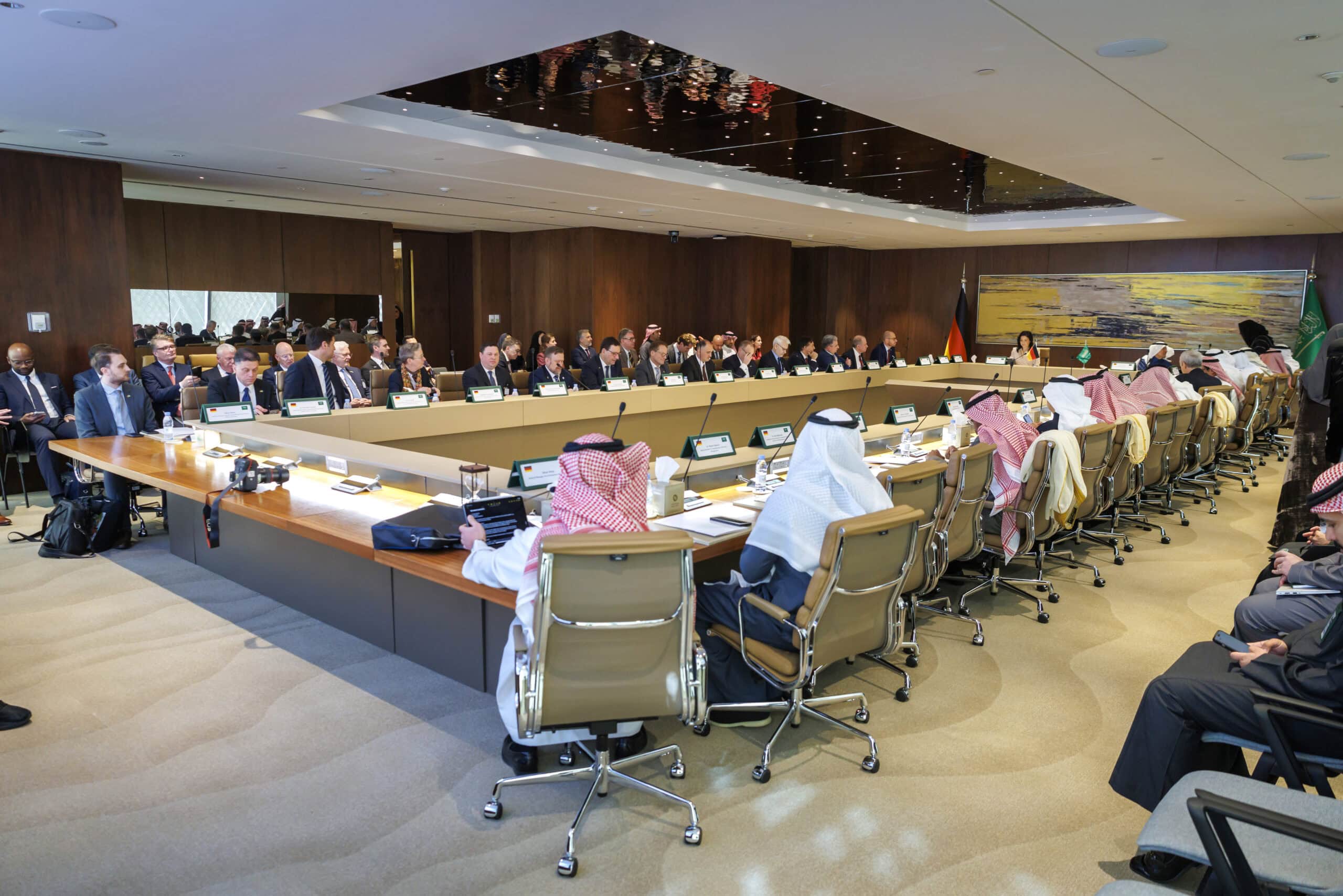
Throughout the year, the Energy Dialogue actively supported government-to-government (G2G) and business-to-government (B2G) exchanges. This included organising a webinar on certification for hydrogen fuelling stations in September 2025 with the Saudi Ministry of Energy, as well as a business-to-government high-level executive energy roundtable in Riyadh, held in January 2026.
Power‑sector cooperation and regional initiatives
Beyond hydrogen, the Energy Dialogue also addressed power‑sector cooperation, aligning with Saudi Arabia’s ambitious renewable energy expansion targets. Plans to export clean electricity and scale up battery storage under Vision 2030 aim to create new market opportunities. The dialogue provided a framework to explore business opportunities for German companies, while also discussing power and hydrogen trade perspectives in a regional context, including the India–Middle East–Europe Economic Corridor (IMEC).
Ministerial visit and new Memorandum of Understanding
The strong political support for the Energy Dialogue was reaffirmed by Federal Minister Katherina Reiche’s visit to Riyadh and Jeddah in January 2026. During the visit, an Memorandum of Understanding was signed to deepen bilateral energy cooperation and open new areas of collaboration, including industrial decarbonisation and carbon management.
More information
1. What has been the most tangible outcome or impact of your partnership activities in 2025?
- Continued support for the German private sector to engage in hydrogen projects in Saudi Arabia with the signing of four Memoranda of Understanding (MoU) and one Joint Development Agreement (JDA) for the Yanbu Green Hydrogen Hub Project.
- Political momentum was built to advance and diversify bilateral energy cooperation.
2. Which focus areas were particularly relevant for your country in 2025?
- Hydrogen trade
- Hydrogen certification
- Cross-border infrastructure and power trade
3. How did your activities contribute to the selected overarching goals (energy security, decarbonisation, foreign trade promotion)?
- Support for tangible projects along the hydrogen value chain helps accelerate market adoption, contributing to energy security and decarbonisation in Germany.
- Supporting market entry for German technology providers in emerging energy markets in Saudi Arabia.
- The dialogue strengthened energy security through roundtables with key Gulf Cooperation Council (GCC) actors discussing visions for an interconnected EU–MENA electricity grid and supporting the India–Middle East–Europe Economic Corridor (IMEC) initiative.