Since 2011

From Strategy to Action: Driving Decarbonisation in Kazakhstan
- Buildings are central to Kazakhstan’s decarbonisation efforts, accounting for over a third of final energy consumption, while outdated insulation and coal-based heating continue to drive high emissions.
- The housing and utilities sector was identified as a strategic priority, recognised as essential for advancing sustainable development.
- A strategic Roadmap for the Decarbonisation of the Building Sector was developed under the Energy Dialogue, outlining a clear pathway to reduce energy consumption and CO₂ emissions.
- Capacity-building at the municipal level supported implementation, culminating in Astana’s commitment to develop its own modernisation plan.
Energy security
Decarbonisation
Foreign Trade Promotion

Initiating a building modernisation plan
In Kazakhstan, buildings account for over a third of final energy consumption. Poor insulation from the Soviet era and long heating periods lead to high heat demand, which is still almost entirely met by coal. The government therefore identified the housing and utilities sector as a key priority and a central prerequisite for sustainable development.
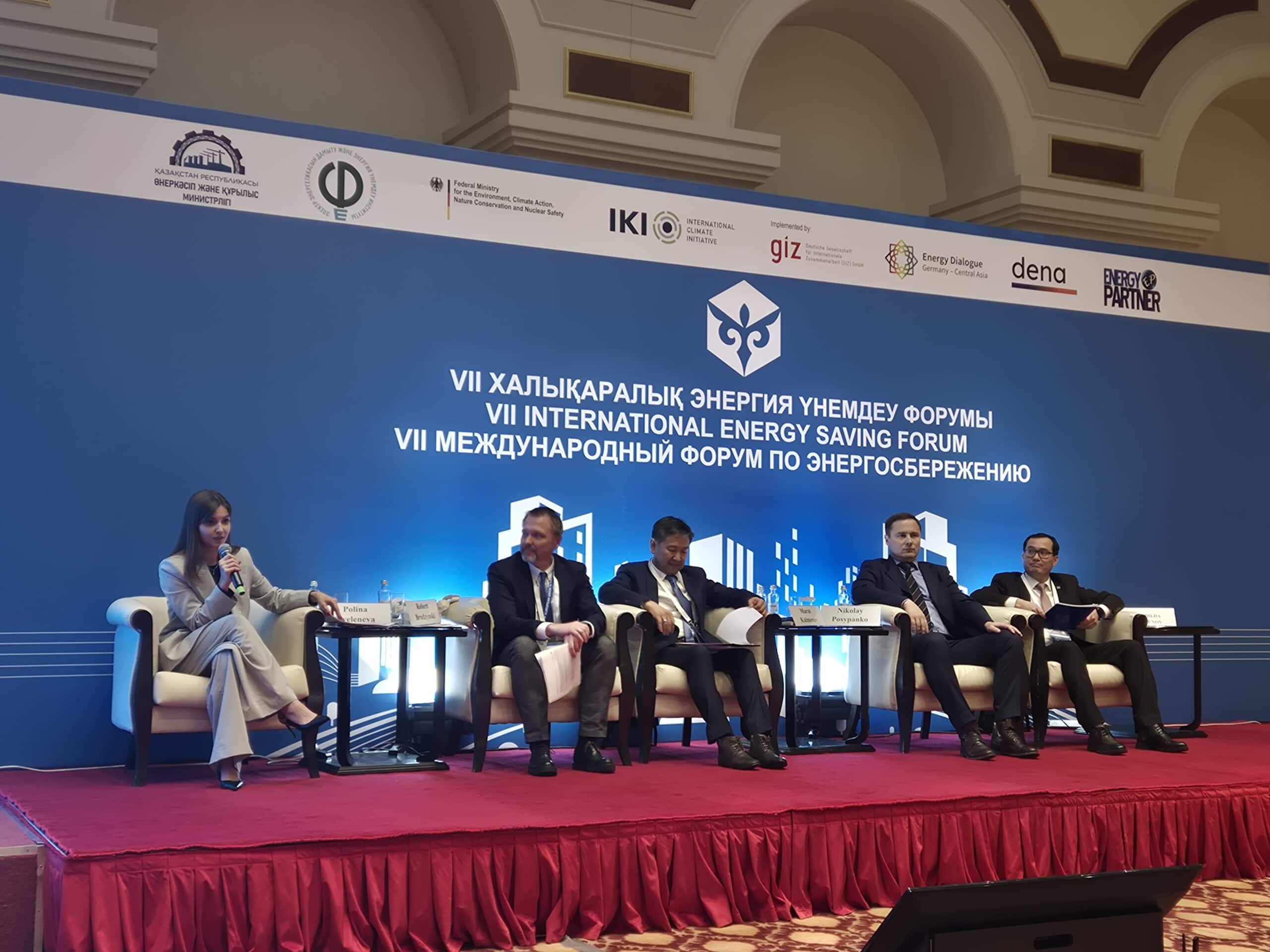
At the request of the partner ministry, the Energy Dialogue (ED) developed a Roadmap for the Decarbonisation of the Building Sector – a strategic, policy-focused document that outlines a clear pathway for reducing energy consumption and CO₂ emissions. To support local implementation, five training webinars were held for municipal decision-makers. These efforts led to a significant outcome: the Astana City Council committed to developing and funding its own modernisation plan based on the Roadmap in 2026.
Powering transformation: Building Kazakhstan’s hydrogen economy
In 2025, Kazakhstan advanced from climate ambitions to a concrete roadmap to cut CO₂ emissions, reduce fossil fuel dependence, and build a hydrogen economy with future export potential.
Key achievements supported by the Energy Dialogue included the adoption of the Law on Alternative Energy Sources, the establishment of a regulatory framework for low-carbon technologies, and the revision of the National Hydrogen Concept (NHC). The dialogue also supported a Hydrogen Initiative Group with the German-Kazakh Chamber of Commerce and Industry (AHK Central Asia), identifying foreign trade potential for German companies in areas such as electrolysis technology, renewable energy integration, hydrogen transport and storage, industrial applications, and certification standards.
The updated NHC was being developed in a more systematic and implementation-oriented way than before, with input from industry, government, and international partners. The Energy Dialogue participated in ministerial working groups and provided targeted input on international best practices, offtake market development (export and domestic), water resource management, and environmental regulation.
Publications from 2025:
- Case Study: Kazakhstan on the Way to Hydrogen Ramp-up (in cooperation with GIZ’s H2Diplo)
- The EU’s Carbon Border Adjustment Mechanism (CBAM): Potential Impact on Kazakhstan’s Economy
- Biogas in Kazakhstan: Overview of Potentials, Technologies and the Regulatory Framework for the Construction and Operation of Biogas Plants
International cooperation is a key driver in achieving Kazakhstan’s strategic goal of carbon neutrality by 2060. Therefore, we highly value the opportunity to facilitate the transfer of knowledge, best practices, and advanced approaches within the framework of the Energy Dialogue between Kazakhstan and Germany.
More information
1. What has been the most tangible outcome or impact of your partnership activities in 2025?
- The City of Astana has committed to developing a building modernisation plan based on the Roadmap for the Decarbonisation of the Building Sector prepared under the Energy Dialogue.
- Kazakhstan Housing Company, the country’s largest development finance institution for housing policy implementation, has taken an investment decision to establish a project office. Initiated by the Energy Dialogue, this office will serve as an institutional platform to coordinate and scale building modernisation efforts.
- Kazakhstan Housing Company has also decided to integrate the Energy Dialogue’s digital tool — the Energy Efficiency Interactive Map — into the national territorial development visualisation system.
- Institutional strengthening was further supported through targeted input from the Energy Dialogue to key sections of the new National Hydrogen Concept, particularly in areas such as international best practices, the development of offtake markets (both export and domestic), water resource management, and environmental regulation.
2. Which focus areas were particularly relevant for your country in 2025 and why?
- Modernisation of the housing and utilities sector in response to high energy losses and significant equipment deterioration.
- Grid balancing and digitalisation (smart grid development).
- Ramp-up of the hydrogen market and update of the National Hydrogen Concept.
- Decarbonisation of industrial sectors, particularly export-oriented industries (incl. evaluation of negative impacts of the EU’s Carbon Border Adjustment Mechanism (CBAM).
- Establishment of a national Just Energy Transition Partnership (JETP) platform as a financial mechanism to mobilise and coordinate funding for decarbonisation projects.
3. What were the main challenges in implementing activities in 2025, and how were they addressed?
- Lack of a systematic policy implementation approach in Kazakhstan, particularly in the areas of energy efficiency in buildings and hydrogen development.
To address this gap, the following measures were undertaken:- Development and presentation of the Roadmap for the Decarbonisation of the Building Sector to decision-makers in relevant ministries and city administrations.
- Support in the creation of a Project Office as an institutional mechanism to ensure a systematic and coordinated approach to implementing building energy efficiency policies.
- Advisory support in the preparation of the updated version of Kazakhstan’s National Hydrogen Concept.
- Advisory support in designing the structure of the National Just Energy Transition Partnership platform.
- Capacity development needs: In response to requests from Kazakh partners within the framework of the Energy Dialogue, several analytical studies and capacity-building activities were developed and delivered to strengthen expertise and institutional capacity:
- “Case Study: Kazakhstan on the Way to Hydrogen Ramp-up” (in cooperation with H2Diplo)
- “A Benchmarking Analysis on Energy Intensity Profiles in Kazakhstan and Germany – The Case for the Iron and Steel Industry”.
- “The EU’s Carbon Border Adjustment Mechanism (CBAM): Potential Impact on Kazakhstan’s Economy”
- “Biogas in Kazakhstan: Overview of Potentials, Technologies and the Regulatory Framework for the Construction and Operation of Biogas Plants”
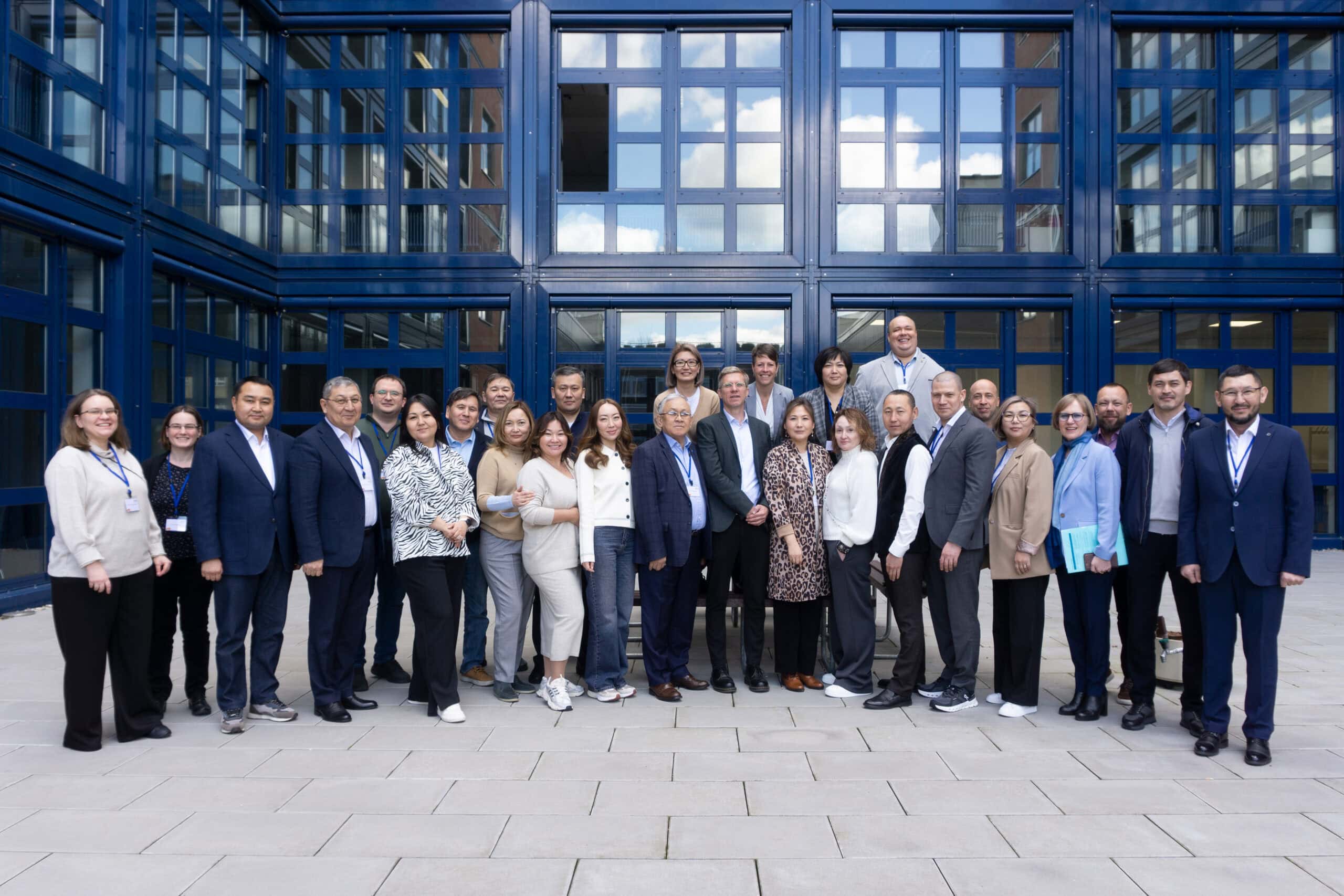
- Five targeted training webinars were delivered to municipal decision-makers to present the principles and approaches of the Building Sector Decarbonisation Roadmap.
4. How did your activities contribute to the selected overarching goals (energy security, decarbonisation, foreign trade promotion)?
Energy security:
The dialogue provided advisory support to the Government of Kazakhstan in establishing enabling framework conditions for the export of green hydrogen and its derivatives. In particular, the “Case Study: Kazakhstan on the Way to Hydrogen Ramp-up” provided strategic guidance on developing a hydrogen market and export infrastructure.
Decarbonisation:
The Energy Dialogue also provided advisory assistance to the Government of Kazakhstan in developing enabling frameworks and a systematic policy approach for:
- Hydrogen market development (contribution to National Hydrogen Concept – NHC)
- Sectoral decarbonisation (in particular iron and steel industry)
- Decarbonisation of the building sector (development of a roadmap)
Foreign trade promotion:
- In cooperation with AHK Central Asia, four meetings of the Hydrogen Initiative Group were organised to facilitate the targeted involvement of German companies and support concrete hydrogen-related project and investment initiatives.
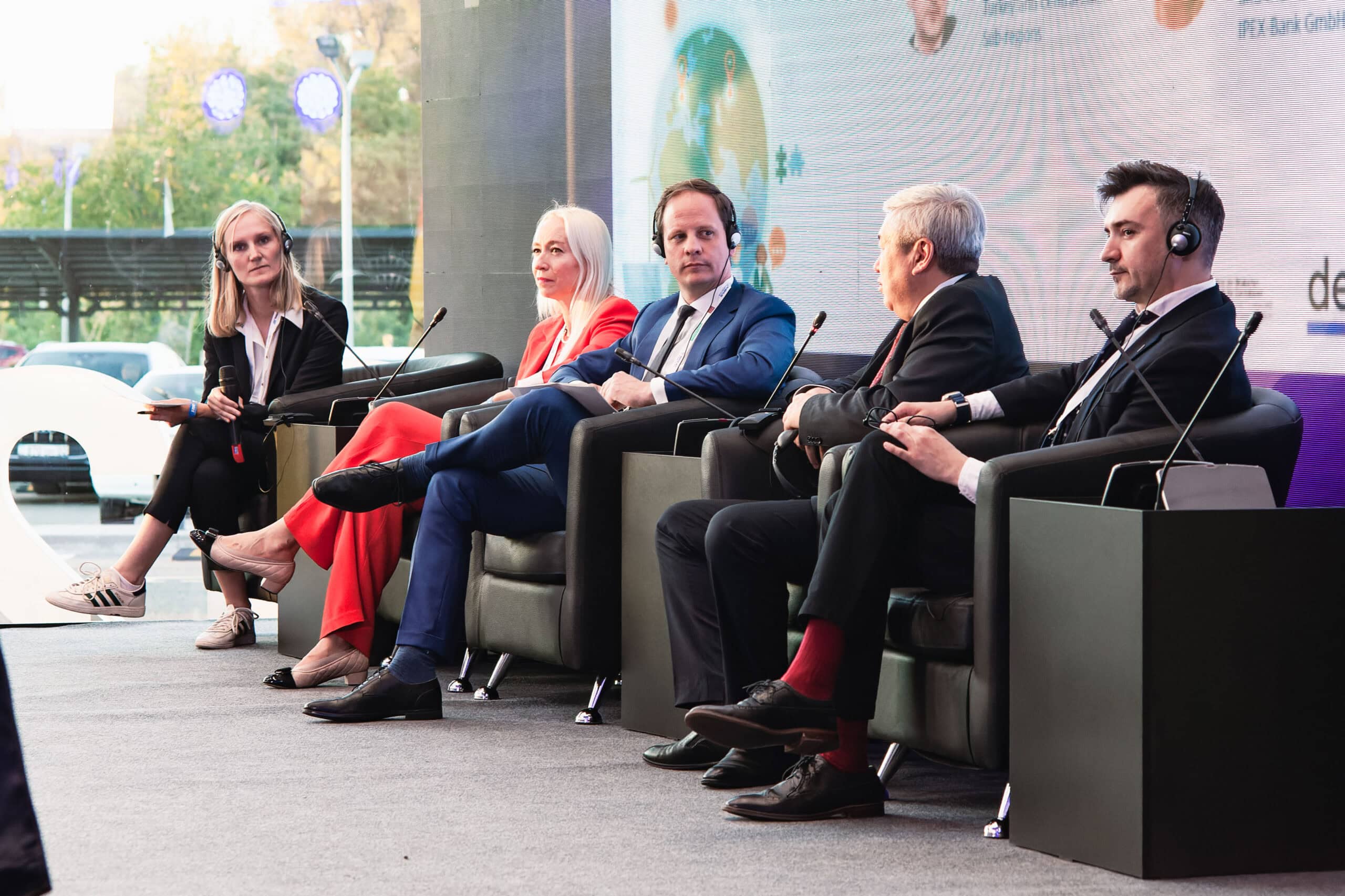
- On 25 September 2025, within the framework of the 27th German Business Day in Kazakhstan (Almaty), the Energy Dialogue organised a high-level panel discussion on investment opportunities for German companies in the context of the energy transition in Central Asia.
5. What concrete activities are planned for 2026?
- Online meetings of the Hydrogen Initiative Group (in cooperation with AHK Central Asia). Thematic focus: industrial applications (refineries), infrastructure and green energy corridor projects, mobility, and storage solutions.
- 18–22 May 2026: Study tour to Berlin on “Energy Efficiency in the Building Sector” for Kazakh policy stakeholders and business representatives. Focus on regulatory frameworks, financing instruments, and market access for energy-efficient building technologies; organised in the context of the Astana Modernisation Plan in cooperation with the project Felicity II.
- Webinar on CBAM and CO₂ reporting with German and European experts, involving companies and public authorities from Kazakhstan.
- Online exchange between German and Kazakh iron and steel companies, including a presentation of the relevant Energy Dialogue study.
- Online exchange between German experts and stakeholders from Central Asia on the topic of energy efficiency of data centres.