Since 2022
Further Establishment of the Green Hydrogen Dialogue Platform and Hydrogen Project Cost Analysis in Focus
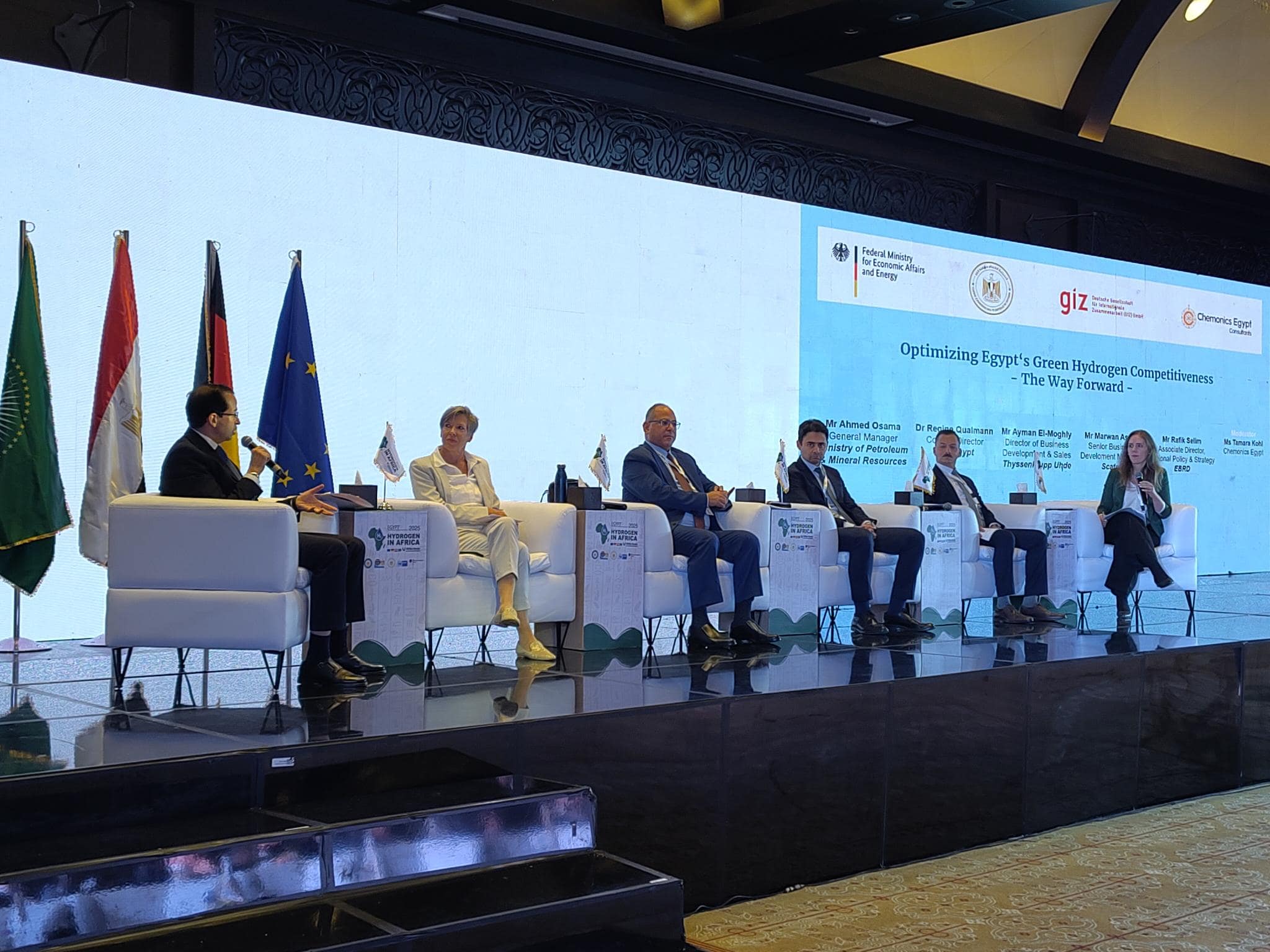
- In 2025, the partnership established the cross-sector Green Hydrogen Dialogue Platform (GH2P) between the public and the private sector and supported two major hydrogen conferences in Egypt, the Regional Green Hydrogen Financing Forum and the Hydrogen in Africa Conference in Cairo. In addition, it marked the launch of a new AHK business-oriented hydrogen event series, designed as an “H2 Business Case Lab”.
- Special thematic focus with training sessions and recent market-study on Green Hydrogen project costs and competitiveness factors for the Egyptian green hydrogen market.
- The GH2-Partnership supported two technical hydrogen conferences in Egypt: the Regional Green Hydrogen Financing Forum and the Hydrogen in Africa Conference in Cairo.
- Kick-off for AHK business-focused H2 event series (in the sense of H2 Business Case Lab) under the GH2P.
Energy security
Decarbonisation
Background
The Egyptian-German Green Hydrogen Partnership (GH2P) serves as a strategic and political dialogue platform to strengthen hydrogen cooperation between Egypt and Germany. Its core objective is to help Egypt establish itself as a leading regional hub for green hydrogen and to support the country in implementing its national hydrogen strategy. In addition, the partnership actively promotes German involvement in project development, technology transfer, and business collaboration, connecting German companies throughout the green hydrogen value chain with opportunities in Egypt.
Further GH2 Dialogue Platform Establishment & Hydrogen Project Cost Analysis at focus
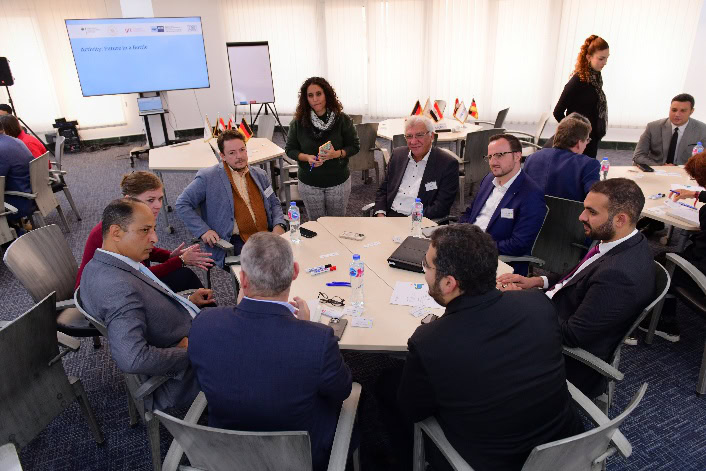
Building on the Green Hydrogen Dialogue platform launched by the Egyptian-German Green Hydrogen Partnership at the end of 2024, the Partnership hosted a series of events in 2025 to facilitate exchange between public institutions, policymakers, technical experts, and industry leaders. These gatherings, drawing approximately 250 participants enabled structured cross-sector exchange and deepened understanding of green hydrogen technologies and value chains. They also helped align the expectations of the diverse stakeholders active in the sector.
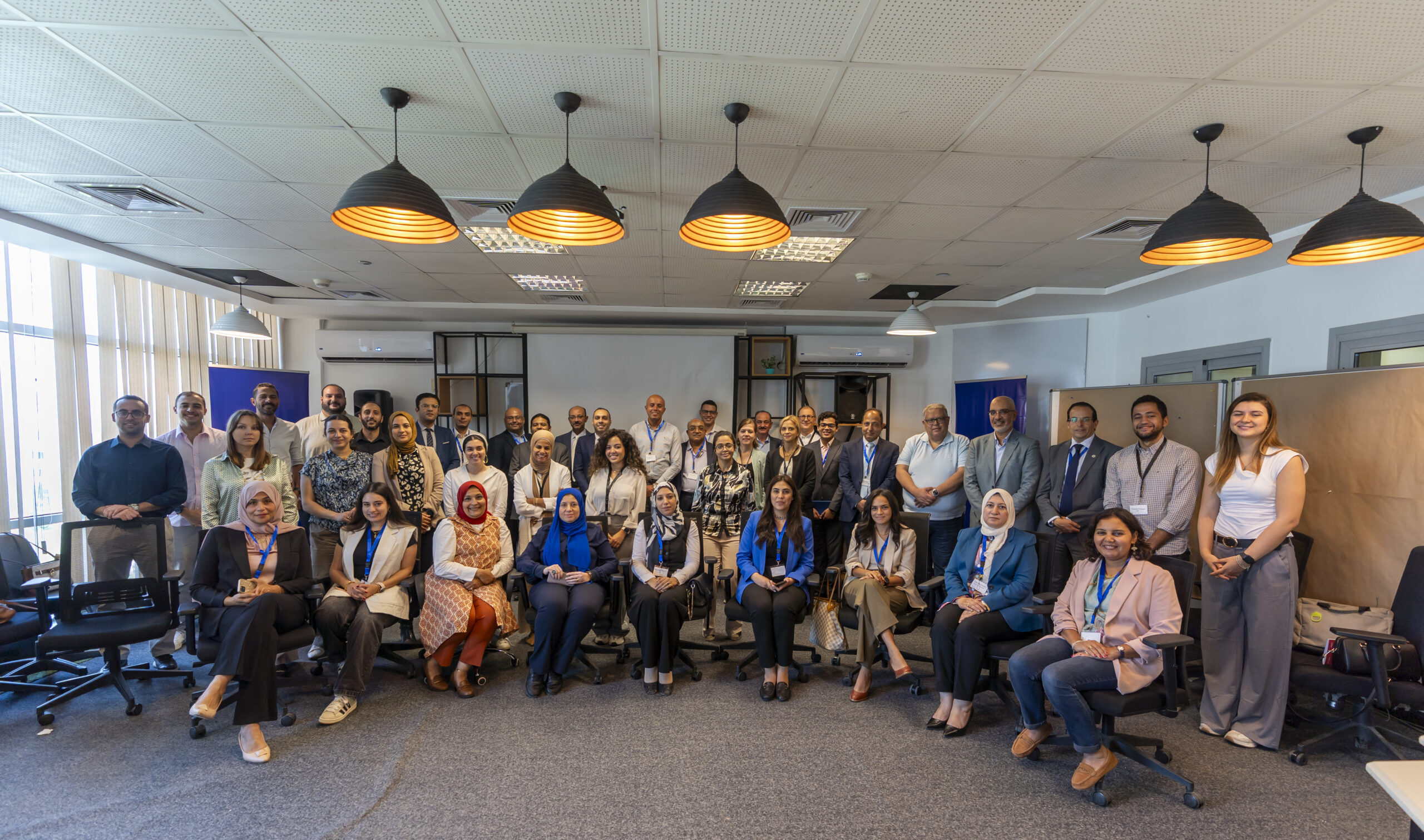
In terms of key topics in 2025, the Dialogue Platform focused on the economic factors determining cost reduction and competitiveness of Egypt’s green hydrogen projects, and the implications for project viability and sustainable business models. As part of this effort, targeted capacity-building training was delivered for Egyptian institutions, including sessions on project financing and the Levelised Cost of Hydrogen (LCOH), a vital metric for evaluating and comparing the economic feasibility of green hydrogen projects.
The training sessions were combined with practitioner workshops with business sector representatives, and support for hydrogen conferences in Egypt with a dedicated focus on project costs and financing. To consolidate these efforts, the Egyptian-German Green Hydrogen Partnership, with the involvement of local experts, also conducted an up-to-date green hydrogen market analysis. This study provided a clear, data-driven roadmap to accelerate Egypt’s market readiness and enhance its global competitiveness. A summary with practical guidance will be available on the Energy Partnership website.
In this voice message, Ragad Kheireldin and Diana Kraft-Schäfer share the milestones achieved by the Hydrogen Partnership 2025.
A shared space for learning
May Khattab, Climate Change and Sustainability Manager at the AHK Egypt, shares her perspective and offers insights into how the partnership brings all relevant stakeholders together to tackle projects collaboratively and with a forward-looking approach.
You are currently viewing a placeholder content from Vimeo. To access the actual content, click the button below. Please note that doing so will share data with third-party providers.
More InformationShaping the future of energy together
Dr Ali Ahmed Ali, Director of Energy Research and Studies at the Egyptian Ministry of Electricity and Renewable Energy, explains who benefits from the Hydrogen Partnership’s activities and why this is so valuable.
You are currently viewing a placeholder content from Vimeo. To access the actual content, click the button below. Please note that doing so will share data with third-party providers.
More InformationDriving Green Hydrogen in Egypt
Eng. Alaa Kamal of INP Egypt LLC discusses the strong partnership between Egypt and Germany, highlighting three critical pillars for developing hydrogen projects: advanced technology, financial investment, and secure off-take agreements.
You are currently viewing a placeholder content from Vimeo. To access the actual content, click the button below. Please note that doing so will share data with third-party providers.
More InformationMore information
1. What has been the most tangible outcome or impact of your partnership activities in 2025?
Increase of know-how and sensitivity in public hydrogen-related local entities, such as Egyptian electricity and petroleum ministries, utilities, energy agencies, transmission companies on hydrogen project cost drivers, in particular levelised cost of hydrogen (LCOH), and both stronger awareness and implications for policymakers to influence cost drivers wherever possible to bring down project costs, and support additional successful GH2 project development in Egypt.
2. Which focus areas were particularly relevant for your country in 2025 and why?
In general, in 2025, Egypt’s key energy policy topics focused on accelerating renewable energy expansion, enhancing green hydrogen projects, linked to that enhancing grid infrastructure, and ensuring natural gas security/ supply. Regarding renewable energies, Egypt scaled up solar and wind capacity by 2 GW in 2025. Policies emphasised public-private partnerships, power purchase agreements (PPAs), and build-own-operate (BOO) models to add 6.47 GW of solar and wind capacity. This supports the national target of 42% renewables by 2030, which is also laid down in the national low-carbon hydrogen strategy.
In addition, in 2025, the green hydrogen sector in Egypt began to navigate a shift from a very strong international GH2 export market perspective, on which project development focussed so far, to also establishing the domestic green H2 market and use in the local industry for decarbonised production (fertiliser, steel, cement); the latter being also relevant for developing infrastructure and successful pilots, which would also support green hydrogen export infrastructure in the medium term. This new perspective also reflects the current global and EU-based lower offtake demand.
3. What were the main challenges in implementing activities in 2025, and how were they addressed?
Given the Energy Partnership’s strong focus on green hydrogen, the global and EU market situation, particularly the lower-than-expected offtake demand in the EU and Germany due to higher production costs, posed a significant challenge for partnership activities in 2025.
This initially led to uncertainty among partners regarding how to adjust their respective workstreams and activities under the partnership.
Background: in early 2025, it was globally and publicly discussed that green hydrogen’s levelised cost of hydrogen (LCOH) remained prohibitively high, driven by expensive renewable electricity (up to 60% of costs) and low production volumes that prevented economies of scale. However, the EP adapted to the situation, on the one hand addressing exactly the topic of cost factors for GH2 projects and how to bring costs down with different activities on that subject (see above No. 1; also main text and key messages), and on the other hand supported the discussion on further development of the local H2 market and Egyptian industry under the GH2 dialogue platform.
4. How did your activities contribute to the selected overarching goals (energy security, decarbonisation, foreign trade promotion)?
Contribution to Decarbonisation: Through its industry-focused H2 event series together with AHK Egypt, the EP contributed to decarbonisation efforts. The series was kicked off in 2025 as an H2 Business Case Lab, which will continue in 2026.
With this service the EP Secretariat together with AHK started to offer a practice oriented format for businesses to identify possible project and business cases in selected, also less obvious fields of the hydrogen market and value chain, such as H2 in the Egyptian tourism sector at Red Sea, Waste-to-Hydrogen or H2 in the local industry (fertiliser, chemistry, steel, cement for gAmmonia, gSteel for CO2 reduced production and decarbonisation).
This enabled the development of ideas and approaches for decarbonisation across various greenhouse gas (GHG)-intensive sectors, such as tourism, mobility, community waste and industry. By expanding options for the domestic use of hydrogen, it also laid the groundwork for successful pilot projects and the development of key infrastructure required for the future export of green hydrogen or Power-to-X (PtX) products to the EU and Germany. In doing so, it contributed to meaningful carbon reduction, particularly in hard-to-abate industries in Europe.
5. What concrete activities are planned for 2026?
- Under the Green Hydrogen Dialogue platform between private and public sector: minimum 7 additional workshops and/ or trainings with goal to develop a Green Hydrogen Roadmap for Egypt as one of the key products of the dialogue platform, based on working groups with stakeholders and defining priority action fields for further market development.
- Business focused H2 event series with AHK on H2 business case/ project development (ca. 6 events/ workshops)
- Consulting on energy system planning related to the Egyptian Hydrogen targets and strategy, carried out jointly with dena to include German energy planning experience with focus on planning governance structures; this will include technical workshops and expert matching in Egypt and/ or Germany.
Contact
Diana Kraft-Schäfer
Head of the Secretariat for the Egyptian-German Green Hydrogen Partnership (GH2P)